
Have you ever wondered why being near water makes you feel good? It happens whether you’re diving into the sea, floating in a pool, or simply sitting near the shoreline watching the tide move in and out. Your breathing slows, your shoulders drop, and whatever was crowding your head begins to loosen its grip. Being near water makes us feel good.
Advice like ‘touch grass’ circulates the mental health space online, but some experts are urging us to look beyond the shore. A recent wave of new research suggests that we should actually be touching water, with the benefits of the ocean extending far beyond the surface, shaping how we feel, think, and recover.

The Universal Draw of Water
This isn’t a new phenomenon. Being near water has always been rejuvenating, and now research has come into view to support that: it’s not in our heads. It really is beneficial to our minds and bodies.
We unconsciously look for water wherever we can find it. Whether that’s opening up the rain sound app to help us fall asleep, spending an extra 5 minutes in the shower just because it feels good, or chartering a boat and spending a whole week at sea. We give a premium to water because we instinctively know its value. Hearing it, being immersed in it and even seeing a glimpse of it leads to calmness and stress relief.

The Science Behind the Benefits of the Ocean
- Being the near ocean reduces anxiety
Research has found that being near the ocean can quiet the mind, allow the lungs to breathe more deeply, and relax the muscles. An immediate lowering of cortisol, a release of anxiousness, where only the rhythmic push and pull of the tides matter. - The rhythm of the tides calms the nervous system
Hearing the rhythmic swells of the waves against the shoreline can calm the nervous system, reports say. This happens because the continuous, repetitive patterns created by the rolling of tides boost the theta and alpha brainwaves, which are linked to reduced anxiety and deep relaxation. - Negative ions found in ocean air clear allergens
Research has shown that the sea air is rich in negative ions that clear the air of allergens, allowing us to absorb more oxygen and leaving us with more energy. This not only increases our urge to exercise, but it could even lead to a good night’s sleep. - Cold water therapy resets cortisol levels
A short plunge, even just a couple of minutes in water around 10 to 15°C, is enough to shift things. Your breathing changes, your body wakes up, and there’s a noticeable lift in energy afterwards. It’s an easy way to reset cortisol and dopamine when trips to the Amalfi Coast or Raja Ampat just aren’t in the cards. - Blue spaces improve focus and mental clarity
Being near water doesn’t just relax you, it can also help you think more clearly. Researchers link this to something called “soft fascination”. Unlike cities, which demand constant attention, water holds your focus gently. Watching waves, ripples, or even light moving across the surface gives your brain a break from overstimulation without switching off completely.
The Physical Experience of Being in the Ocean
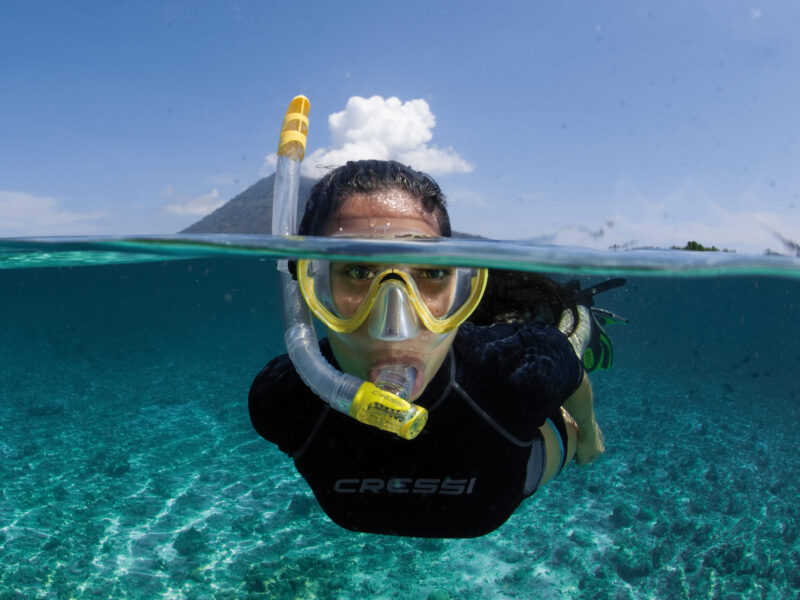
As our head emerges from the water, looking towards the horizon as it meets the skyline, we can’t help but feel free. As we are enveloped in the cool sway of the ocean, at its mercy, we are at our lightest in both body and mind.

The ocean, in its vastness, quiets the mind. Anxieties are pushed back, and the focus pulls towards the present. At this moment, we become part of the blue space. Perspectives shift, and problems seem trivial compared to the blue expanse, where expectations, work pressure, and even the tension of gravity are released.
Blue Spaces: Why being near water makes you feel good
We are firmly in the digital age. Never have we been more connected, but at the same time, this constant digital input is a strain on our minds and bodies.
Today’s culture tends to reward and even applaud fast-paced, high-stress lifestyles. It can sometimes feel like being still and enjoying the art of doing nothing is a waste of time. With a thousand things on an ever-growing to do list, how could spending time in water, not achieving anything, be beneficial? But the benefits of the ocean abound. A sense of stillness, a temporary break from the chaos of life, and a oneness with nature. Sometimes that’s all it takes to reset.

As humans, we look for water wherever we go. It’s instinct, get a table by the riverside, hang out by the pool, take the scenic route by the coastline, sit and get lost in the waves by shore. We intentionally choose to immerse ourselves in blue spaces whenever we can. It’s more than just pleasure; the benefits of the ocean are backed by science and our bodies are subconsciously craving it.
Though the ocean doesn’t fix everything, it’s a great place to reset. It offers us a chance to step back, recharge, and tackle the problems with a shift in perspective and renewed bodies.

TRENDING ARTICLES




FEATURED YACHT