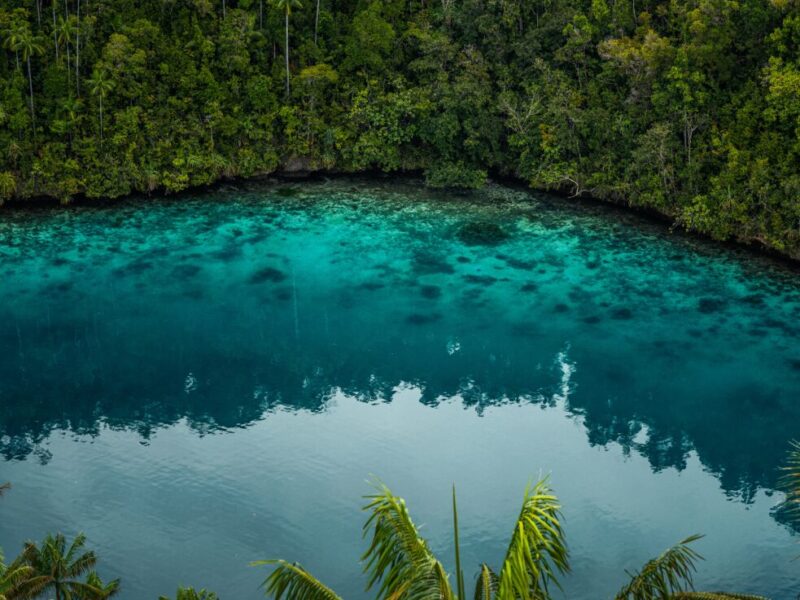
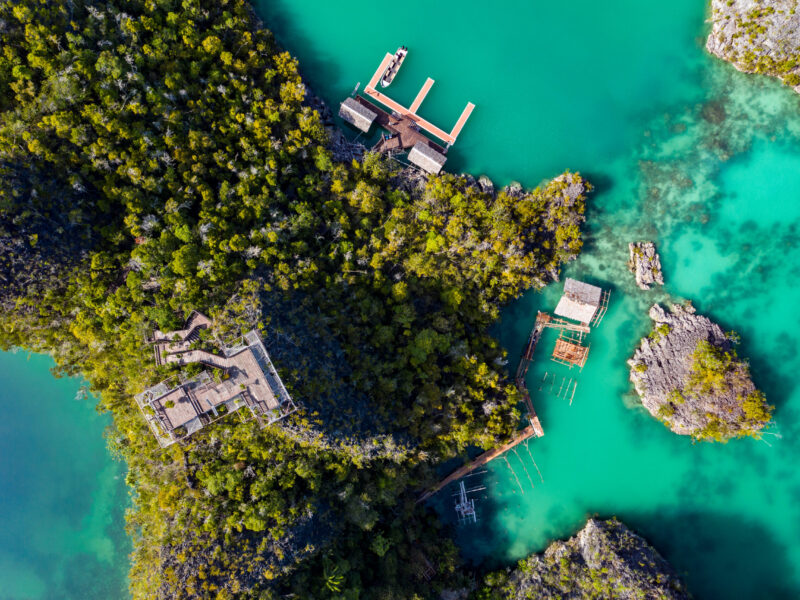
Spread across more than 1,500 islands off the coast of West Papua, Raja Ampat is not a destination built around arrival points or infrastructure. It is defined instead by distance, by fragmentation, and by the simple reality that most of it cannot be reached without a boat. What exists here is not a sequence of places, but a landscape you move through gradually, where the journey itself becomes the defining part of the experience.
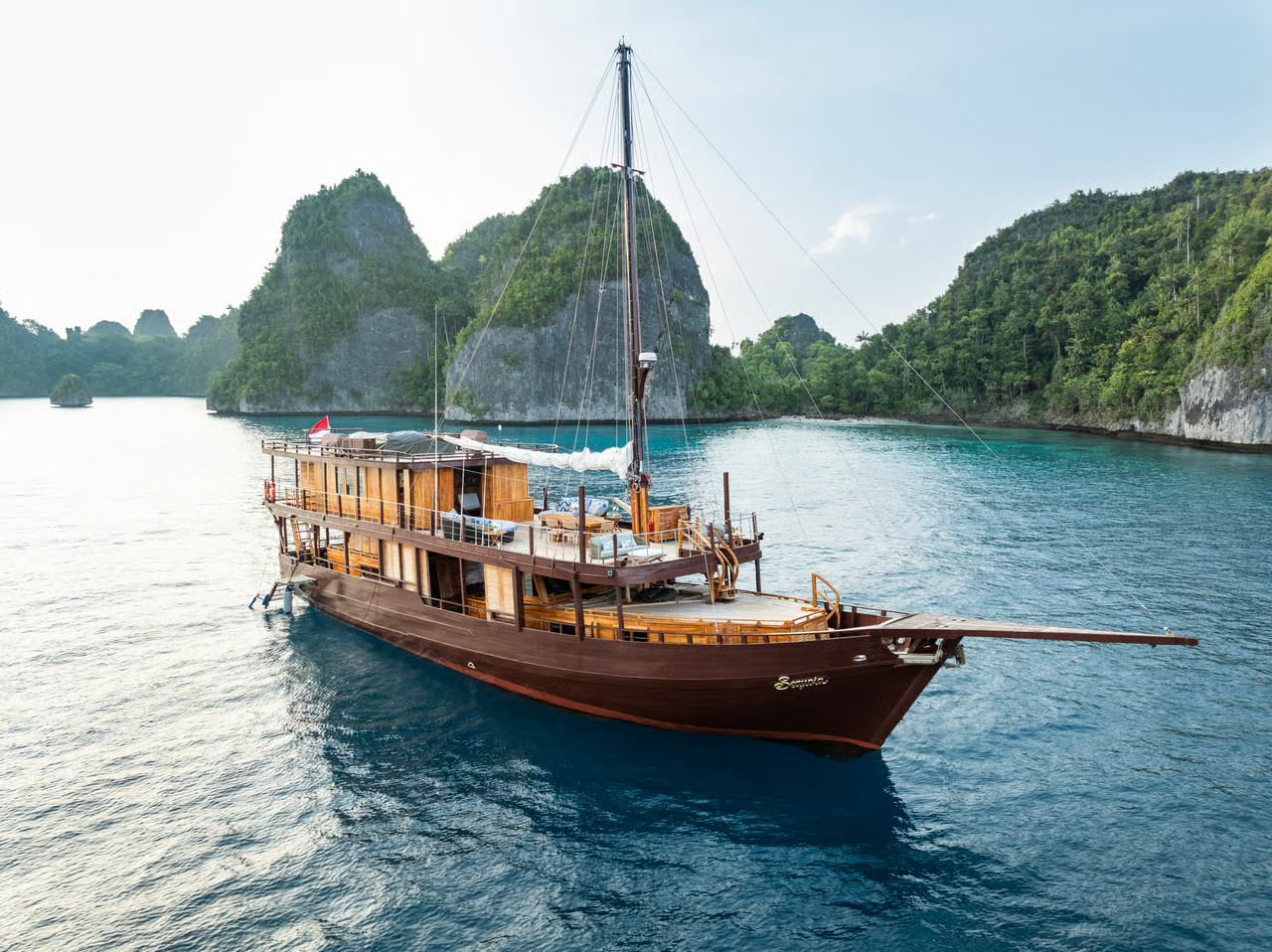
That is what shapes Raja Ampat yacht travel. You are not moving between fixed destinations, but responding to what unfolds around you. A reef becomes the morning, a stretch of water draws you in for a swim, a sheltered bay you hadn’t planned on becomes where you stay the night. By April, that movement feels easier, more settled, and far more intuitive.
Raja Ampat by yacht: why now
Raja Ampat’s primary cruising season runs from October through to April, when weather patterns stabilise across much of the region. By the time April arrives, the conditions have reached a point of consistency that makes a tangible difference to how you experience it.

Wind softens across central and southern cruising grounds, sea states are generally calmer, and visibility tends to improve across many of the region’s key dive sites. Water temperatures sit comfortably around 28 degrees, and while currents remain a defining feature of the area, they are often more manageable at this time of year.
It also sits at a natural turning point in the season. The peak flow of liveaboards begins to ease, leaving a sense of space that can be harder to find earlier in the year. For yacht charters, where flexibility and access define the experience, that shift is significant.
Why Raja Ampat yacht travel works
Raja Ampat is not a destination that lends itself to conventional travel. The distances between key cruising grounds, whether moving from the Dampier Strait to Misool or pushing further north towards Wayag, are substantial and often require full cruising days or overnight passages. There are no well-established marinas, very limited shoreside infrastructure, and many of the most compelling anchorages exist entirely off-grid.

But somehow that’s part of the adventure when it comes to Raja Ampat yacht travel. The experience is built around anchoring. Quiet bays, reef-protected inlets, and island edges where the seabed shelves gradually enough to hold. Navigating this requires local knowledge and an experienced crew, but it also offers access that is difficult to replicate elsewhere.
It is this access that defines Raja Ampat and makes it the perfect example of where travel to in April. Remote lagoons that cannot be reached by land, dive sites far removed from any fixed base, and long stretches of coastline where the only sign of life might be a small fishing boat passing in the distance. In this context, the yacht is not an added luxury, but the thing that makes the journey possible in the first place.
The Raja Ampat charter routes to know
Dampier Strait
Most Raja Ampat itineraries begin within the Dampier Strait, the channel that runs between Waigeo and Batanta and forms the ecological centre of Raja Ampat. Strong currents draw nutrient-rich waters through this passage, supporting one of the highest concentrations of marine life anywhere in the world.
For divers, this translates into sites such as Cape Kri and Sardine Reef, where sheer volume becomes the defining feature. Reef sharks, schools of fish, and manta rays move through these waters in a way that feels continuous rather than occasional.
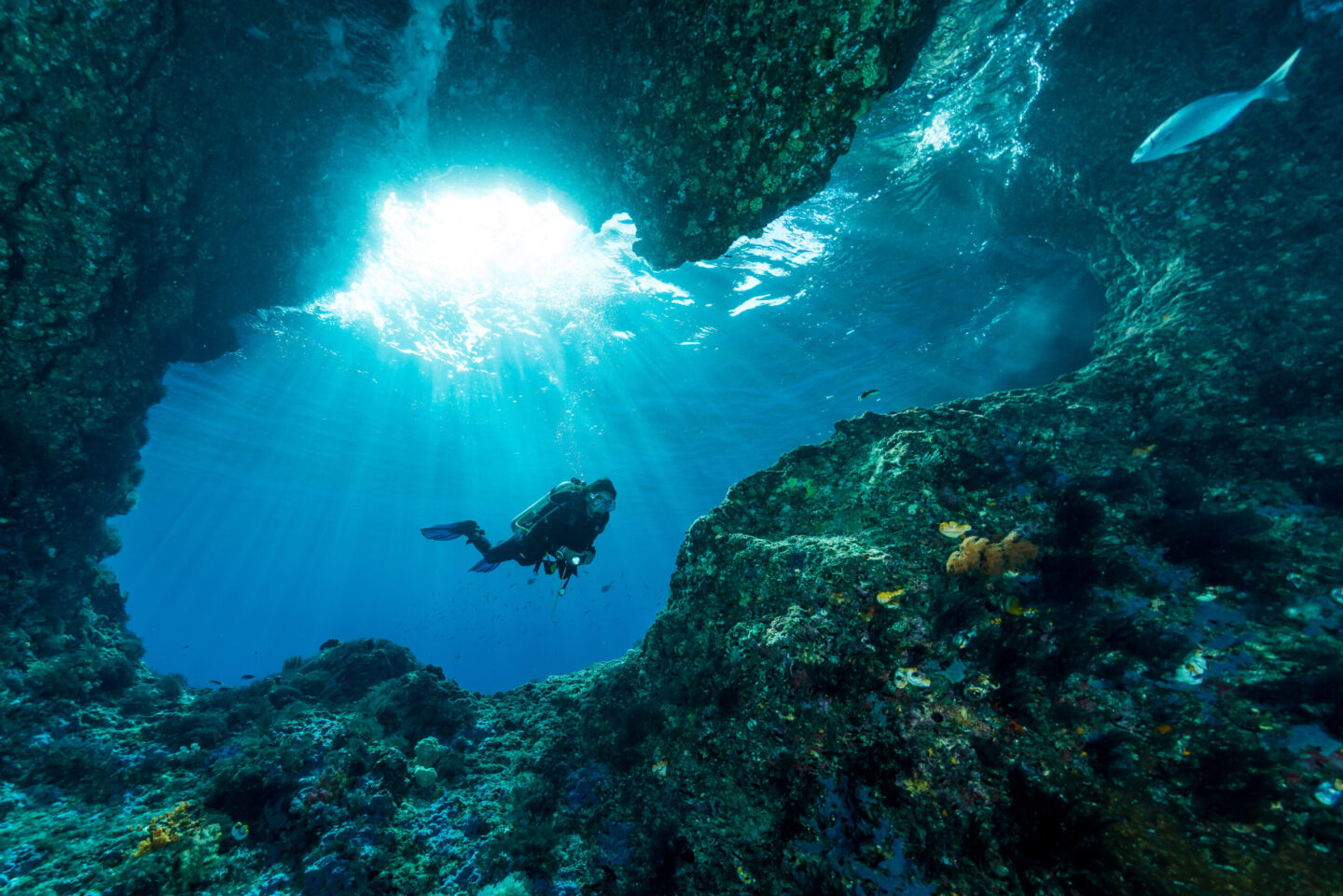
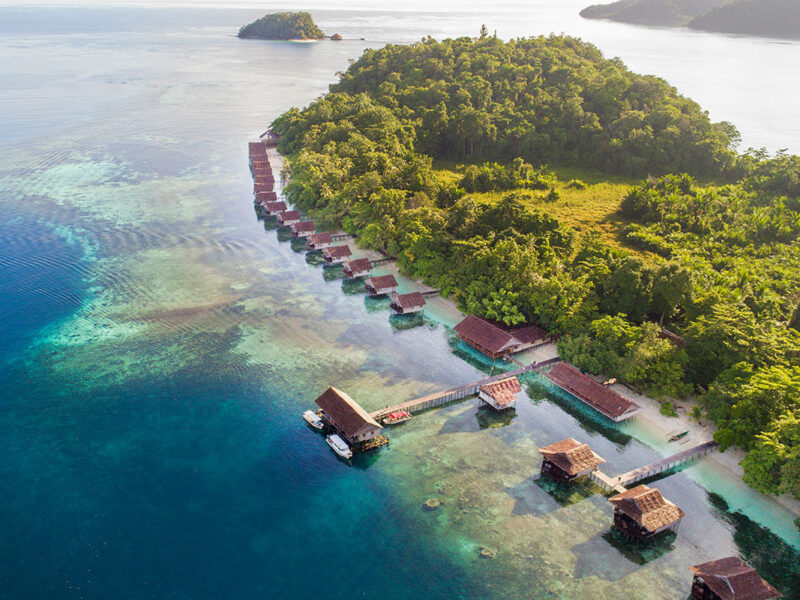
Above the surface, the landscape is equally striking. Limestone formations rise sharply from the sea, their edges softened by mangroves and narrow beaches that often remain completely empty. It is also here that some of the region’s more established properties sit, including Papua Paradise, offering a point to pause and experience the same environment from land without losing its context.
Misool
Further south, Misool introduces a different scale and pace. The distances increase, the number of vessels drops significantly, and the geography becomes more intricate. Narrow channels cut through rock formations, opening into hidden lagoons, while reef systems stretch out in ways that feel largely untouched.
This region is often considered home to some of the best diving in Raja Ampat. Soft coral gardens, dramatic drop-offs, and sites where visibility and colour combine in a way that feels almost disorienting at first.

From a yacht, however, Misool is less about ticking off specific locations and more about the overall experience of being there. The sense of isolation is immediate, and it reshapes how you move, encouraging a slower, more considered approach to each day.
Wayag and the northern islands
To the north, Wayag offers the landscape most closely associated with Raja Ampat. A network of karst islands rises out of shallow, clear water, forming one of the most recognisable views in the region. Reaching it requires time, typically involving a longer passage that naturally limits the number of visitors. That distance is part of what preserves it.
Arriving early, before the heat builds, the climb to one of the viewpoints reveals the full scale of the area. From above, the islands appear almost architectural in their arrangement. Back at sea level, the experience becomes quieter again, defined by still anchorages, shallow reefs, and long periods without encountering another boat.
The rhythm of it all
Time in Raja Ampat does not follow a rigid structure, and attempts to impose one tend to fall away quickly. Days often begin early, shaped by light and water conditions rather than a fixed schedule. Movement between anchorages is dictated as much by the sea as by intent, and long stretches of time are spent in the water, whether diving, snorkelling, or simply drifting above reefs that feel closer than expected.
Raja Ampat cuisine follows the same logic. Fresh fish, caught locally and prepared simply, sit alongside rice, sago, and greens sourced from nearby islands. The flavours are direct, shaped by what is available rather than what is curated, something explored more fully in the region’s food culture.

Over time, the need to define each day diminishes. Attention shifts away from destinations and towards smaller details, the quality of the light, the movement of the water, the gradual change in landscape as you move through it.
Where to come ashore
When it comes to Raja Ampat yacht travel, this destination offers few obvious opportunities to step off the yacht, and that absence is part of its appeal. Village visits offer a simple and largely unstructured insight into daily life. Wooden jetties, small fishing boats, and communities that remain closely tied to the surrounding waters. These are not curated experiences, but glimpses into a way of life that continues largely unchanged.
There are moments, however, where stepping ashore feels appropriate. Spending time at a resort such as Papua Paradise offers a different perspective, one that slows the pace slightly and allows for a more grounded experience of the same environment. It is less about leaving the yacht behind, and more about shifting how you engage with the place.
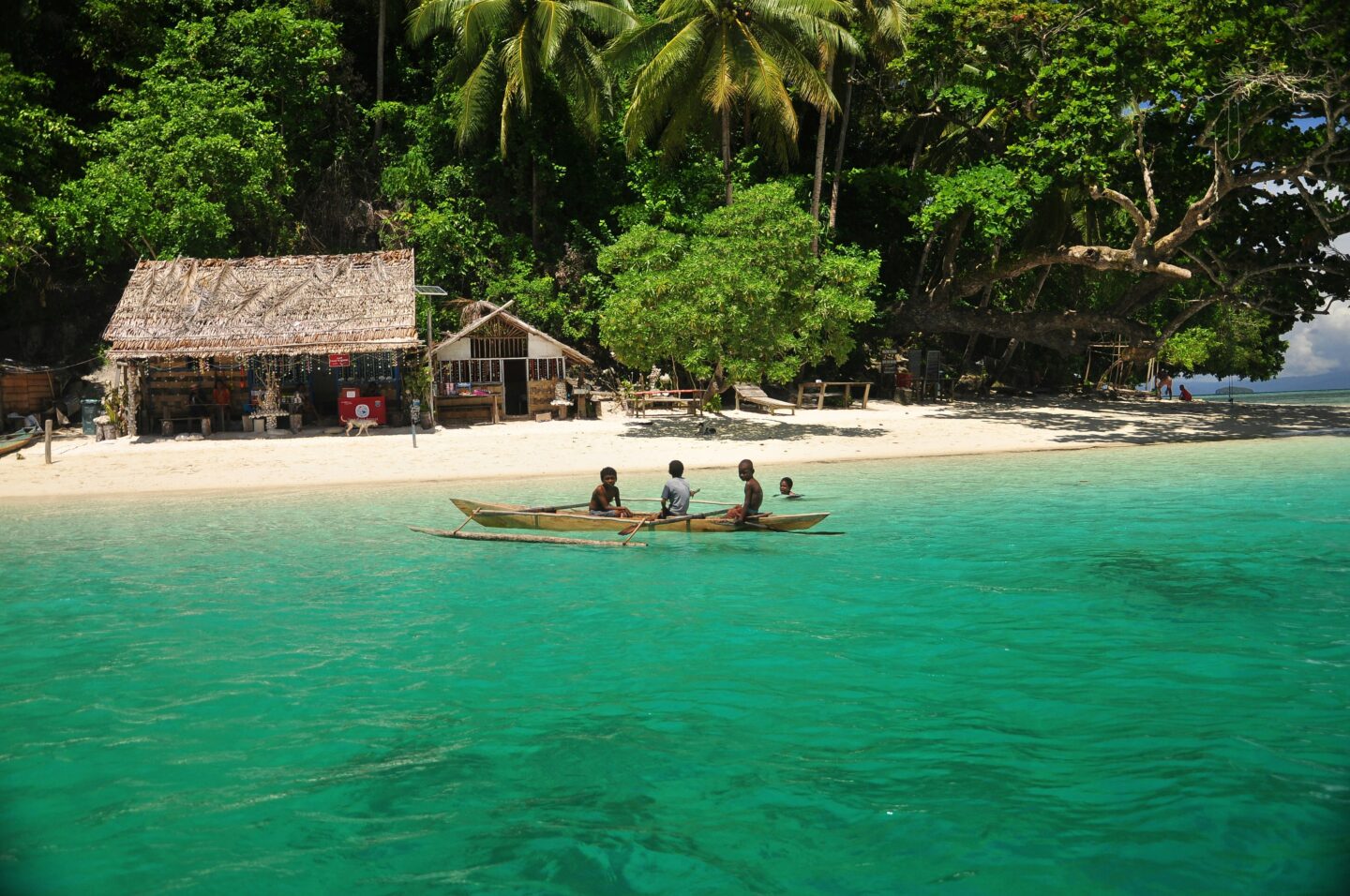
Understanding the region more deeply often comes through these quieter interactions, whether through local culture, food, or time spent away from the constant movement of the boat.
A week in Raja Ampat, loosely mapped
A typical seven to ten-day itinerary will begin in Sorong, moving into the Dampier Strait before branching north towards Wayag or south towards Misool, depending on conditions and priorities. In practice, routes remain fluid. Weather, currents, and visibility all play a role in shaping each day, and the most effective itineraries allow for that flexibility. This is not a destination where fixed plans tend to hold. It is one where you adjust continuously, often with better results.
Don’t miss: top experiences in Raja Ampat
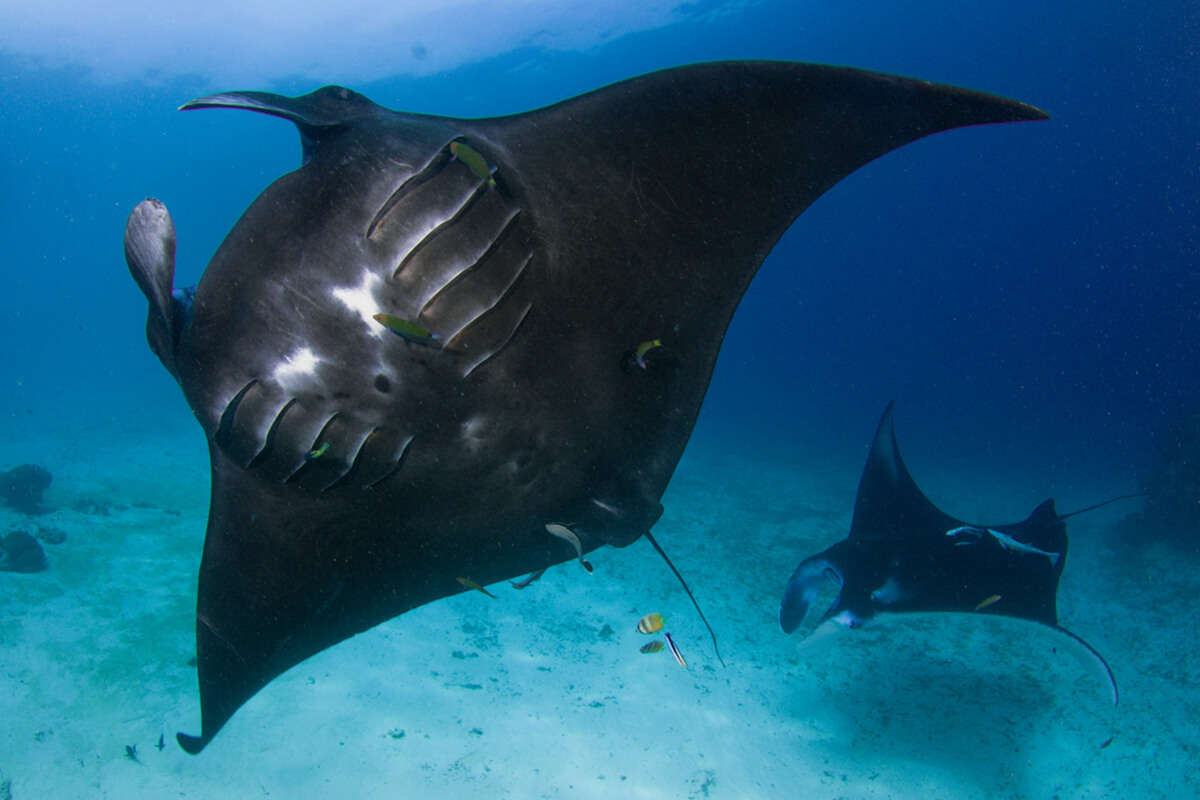
Certain experiences define time here, even if they are difficult to plan precisely. Diving with manta rays in the Dampier Strait is one of them. The scale and movement of these animals, combined with the clarity of the water, creates a moment that feels both controlled and entirely natural.
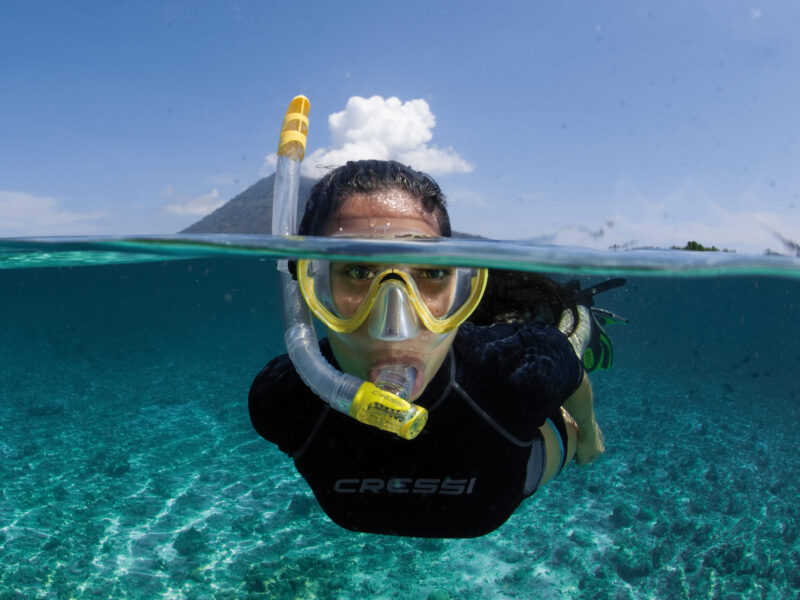
Snorkelling across shallow reef systems offers a different perspective. In many areas, visibility is so clear that depth becomes difficult to judge, with coral formations and marine life unfolding directly beneath you.
Beyond the water, the experience broadens. Early-morning birdwatching in search of birds of paradise, time spent in small coastal communities, and longer passages between islands all contribute to a more complete understanding of the region. It is worth engaging with the cultural context and the way life is lived here, as it shapes the experience as much as the landscape itself.
Where to travel April: Raja Ampat

April sits at a point where conditions, access and timing align in a way that makes the region particularly rewarding to explore. The seas are generally calm enough to move comfortably between key cruising areas, visibility remains strong for diving, and the number of boats begins to ease just enough to create a greater sense of space.
More than anything, it is a time when the practical aspects of travel recede slightly. Movement becomes easier, plans require less adjustment, and the experience begins to feel more fluid.
That is ultimately what makes April the right moment to be here. Not because it is dramatically different from the rest of the season, but because it allows Raja Ampat to be experienced with a level of ease that lets its real character come through.

TRENDING ARTICLES




FEATURED YACHT