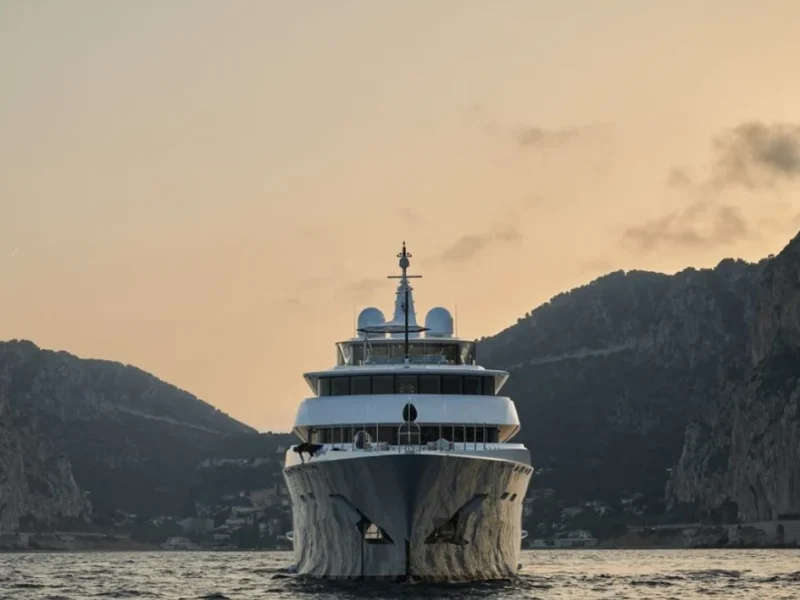
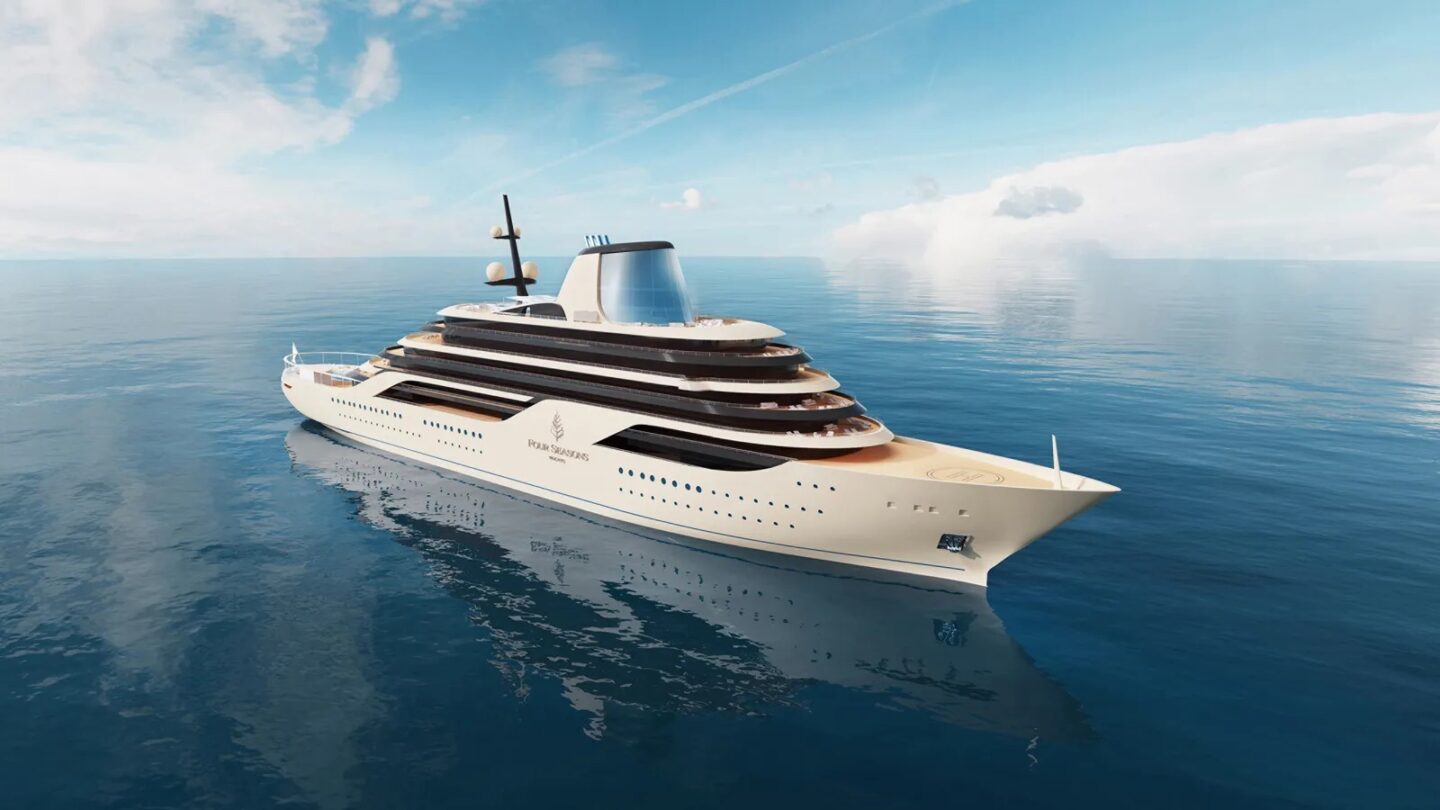
Four Seasons I yacht has officially entered service, marking a long-anticipated shift in how luxury travel is moving to sea.
First introduced as a concept in 2023, the project is now fully operational, with its inaugural voyage departing on 20 March 2026 from Málaga. At 207 metres, the vessel sits somewhere between a superyacht and a cruise ship, but doesn’t fully belong to either category. Instead, it introduces something new.
This is not just a luxury hotel brand stepping onto the water, but a response to a broader shift in how people want to travel: less fixed, more fluid, more about how the journey itself unfolds and with a level of luxury that expands horizons.
Four Seasons I Yacht: A milestone voyage
Departing on the 65th anniversary of Four Seasons, the maiden voyage was deliberately timed, marking a symbolic transition from land-based hospitality to a fully realised maritime offering.
The first season will see the yacht operating across the Mediterranean, before repositioning to the Caribbean and the Bahamas. In its first year alone, Four Seasons I yacht is expected to complete sailings across 130 destinations. A second vessel is already scheduled for delivery in 2027, confirming that this is not a one-off experiment, but part of a longer-term strategy.
What makes this moment significant is not just the launch itself, but what it reflects. Luxury hotel brands are recognising that some of the most exciting travel experiences today happen at sea. The question is no longer whether they should enter this space, but how they do it.
Not quite a yacht, not quite a cruise ship
Four Seasons I has been described as a “yacht liner”, a term that attempts to bridge two very different worlds. Built by Fincantieri in Ancona, Italy, the vessel measures an incredible 207 metres and accommodates a relatively moderate 222 guests across 95 suites. That ratio alone sets it apart from traditional cruise ships, where scale typically outweighs space. On a Four Seasons yacht offering, the emphasis is reversed.
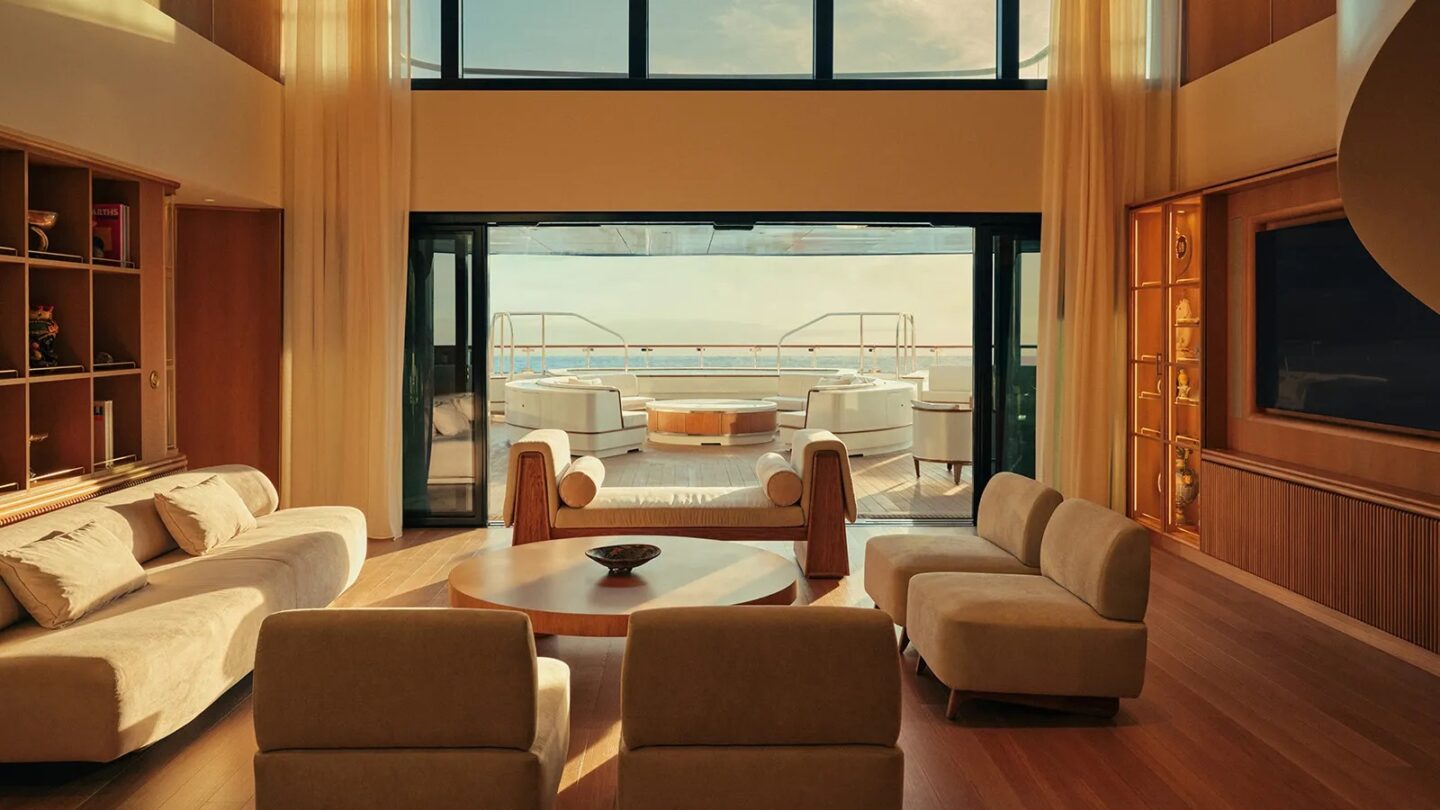
There are no interior cabins. Every suite is outward-facing, designed as a residential space rather than a temporary room. Sizes range from over 500 square feet to the expansive Funnel Suite, a four-level residence of nearly 9,500 square feet, complete with its own plunge pool and panoramic views across the sea.
The design draws subtle references from classic yachts such as Christina O, while integrating contemporary elements like floor-to-ceiling windows and fluid indoor-outdoor living. It feels more like a hotel that happens to move, rather than a ship that has been adapted to accommodate luxury hotel guests.
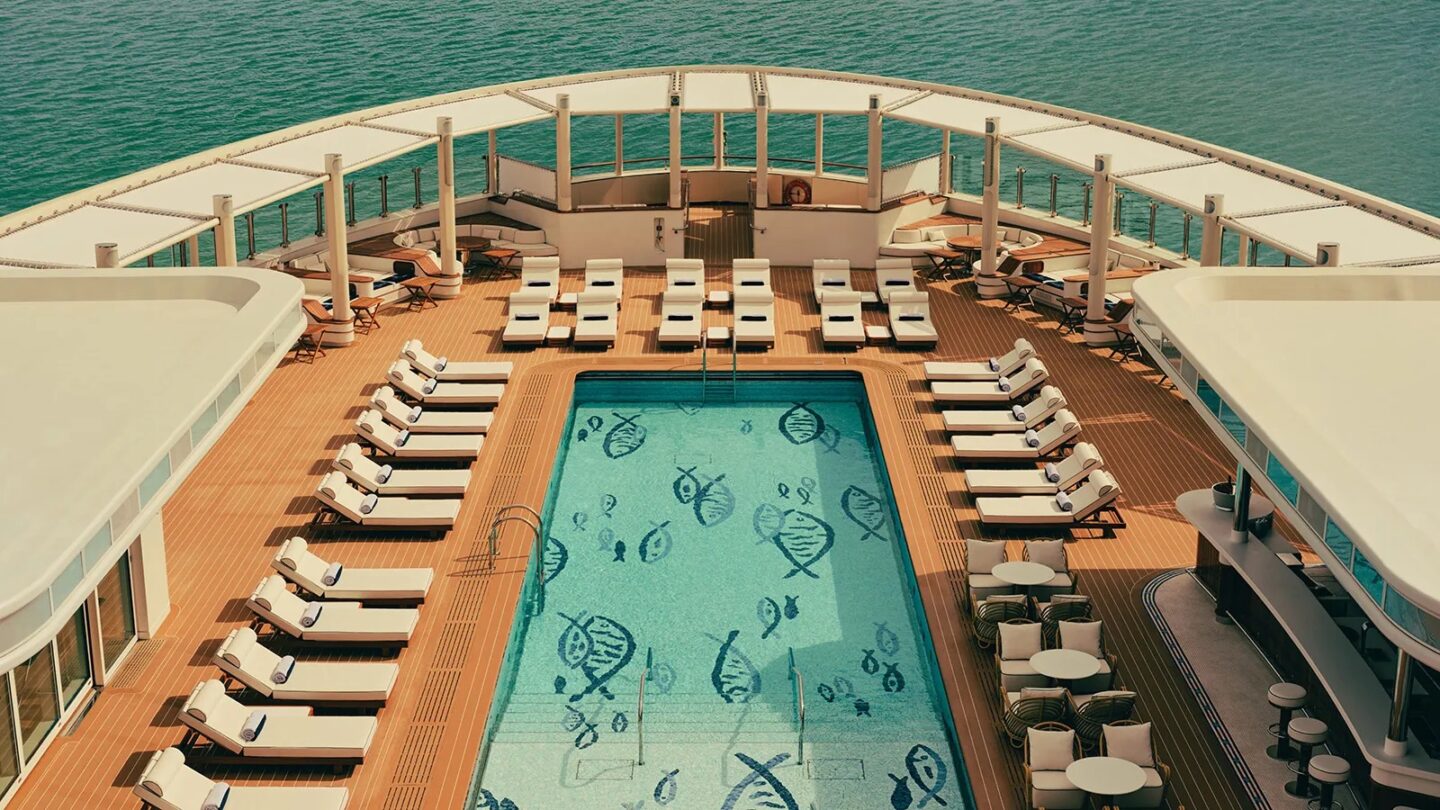
Life on board Four Seasons I Yacht
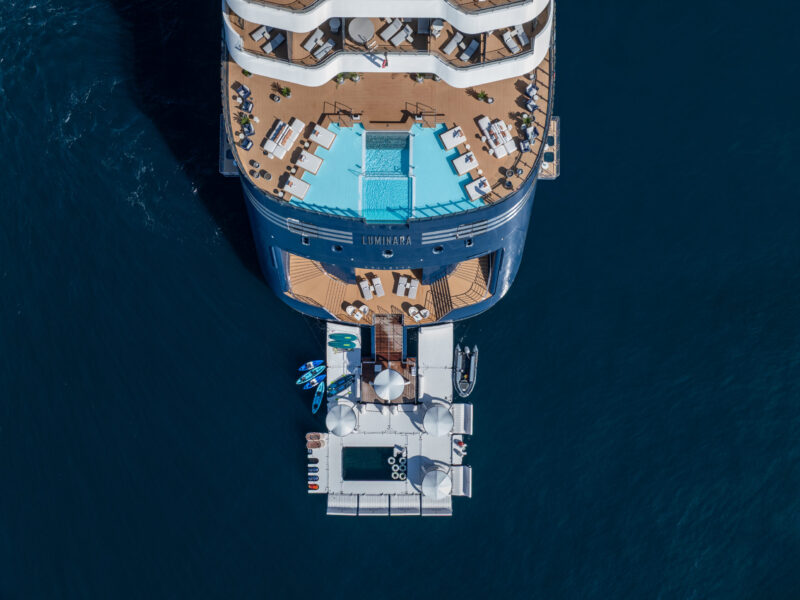
The experience on board is built around space, flow and service. There are 11 restaurants and lounges, each designed to feel distinct rather than repetitive, alongside a full-service spa with thermal suites, hydrotherapy circuits and cryotherapy facilities. Wellness is not an add-on here, but a central part of how the yacht is structured.
One of the most defining features is the transverse marina, which opens across both sides of the vessel. It creates a sea-level platform that connects guests directly to the water, whether for swimming, water sports, or simply being closer to the environment itself.
The scale of the Four Seasons I yacht allows for variety, but it also introduces a different kind of atmosphere. More social than a private charter, but more considered than a cruise. There is movement, but also space to step away from it.
A different way of travelling
Planning a journey on Four Seasons I sits somewhere between booking a hotel and organising a yacht charter. Guests book suites rather than the vessel itself, following fixed itineraries that range from seven to fourteen nights. This removes the complexity of charter, but also introduces a structure that some travellers may find limiting.
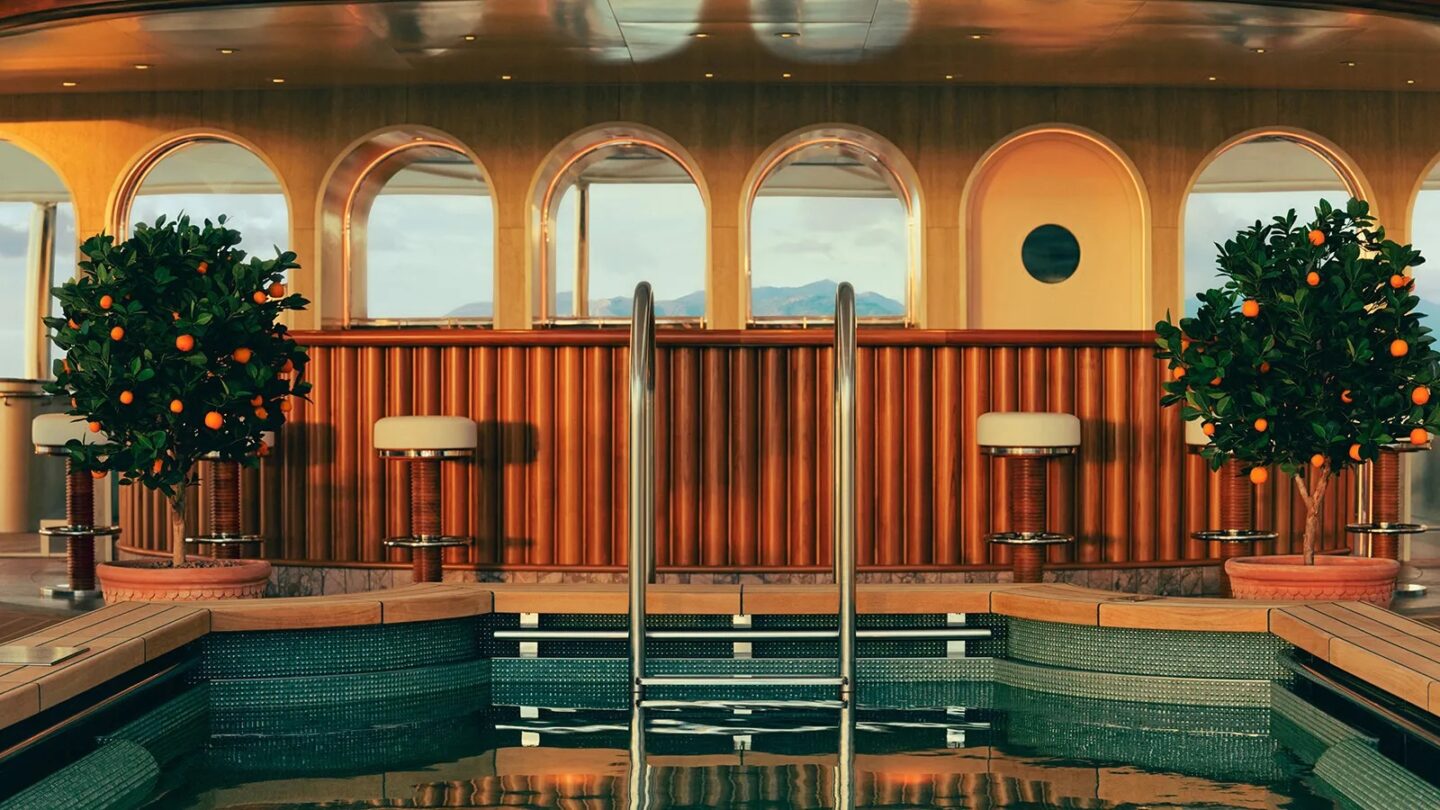
What it offers in return is ease. Seamless logistics, a high level of service, and the ability to move between multiple destinations without having to manage the details yourself.
This is where the experience finds its place. It is not designed to replace traditional yachting, but to sit alongside it, offering a version of life at sea that feels more accessible, while still maintaining a sense of privacy and refinement.
The reality behind the experience
For all its strengths, Four Seasons I also highlights the tension between scale and intimacy. It is not a superyacht in the traditional sense, where everything is fully customised and entirely private. Nor is it a cruise ship in the conventional sense. It occupies a space in between, where experience is curated, but not entirely controlled by the guest.
That distinction will define how it is received. For some, it will offer exactly the right balance of service, comfort and exploration, and perhaps an entry point to wider yacht and ocean travel. For others, particularly those familiar with charter, it may feel structured in ways that limit spontaneity.
Luxury Hotel Brands At Sea
Four Seasons I is less about redefining yachting and more about expanding what it can be. It reflects a shift in luxury travel, where the demand for experience, movement and ease is reshaping how journeys are designed. Hotel brands entering the space are not replacing traditional yachts, but offering an alternative way to engage with the sea.
Where it lands will depend on the traveller. But what is clear is that the landscape is changing, and Four Seasons I is one of the clearest signals yet of where it may be heading.
TRENDING ARTICLES

FEATURED YACHT