Earth Month tends to come with big ideas and broad conversations, but it often comes back to something much simpler: paying attention to what is already under pressure. Nowhere is that more visible than in the ocean.
Beneath the surface sits one of the most complex ecosystems on the planet, and one that is increasingly fragile. Marine conservation on Earth Day is not just about awareness, but about understanding the role these environments play, and how easily that balance can shift.
As part of that, we’re focusing on five sea animals that are not only worth knowing about, but worth protecting.
Marine conservation Earth Day
Blue Whales
Blue Whales are among the most powerful contributors to ocean health, playing a vital role in maintaining marine ecosystems. Through their migratory patterns, they circulate nutrients that support the growth of plankton, which in turn sustains entire food chains and contributes to carbon sequestration. Their presence is essential, or perhaps crucial, to the balance of ocean life.
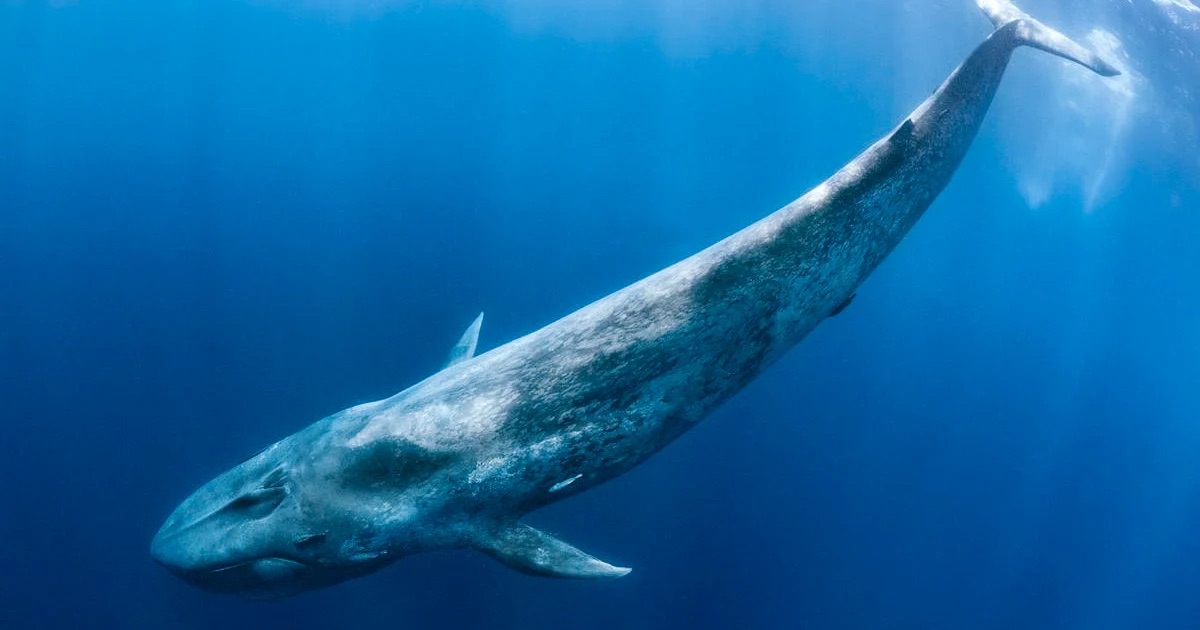
Blue whales are the largest animals ever known on Earth, reaching lengths of up to 100 feet and weights of up to 200 tons.
Aside from noise pollution, these creatures are also affected by ship strikes, entanglement in fishing gear, and other impacts of climate change on their food supply. The International Whaling Commission notes that collisions with large vessels are the cause of death for many whales, while the World Wildlife Fund highlights how common entanglement still is, with a yearly estimate of over 300,000 different species dying from entanglement in fishing nets.
Sea Turtles
Sea turtles, particularly Hawksbill Sea Turtles, are hunted for their precious shells. Prized for their rich colouring and natural translucence, these shells are traded as “tortoiseshell” and then crafted into jewellery and decorative items, contributing to the continued exploitation of such species.
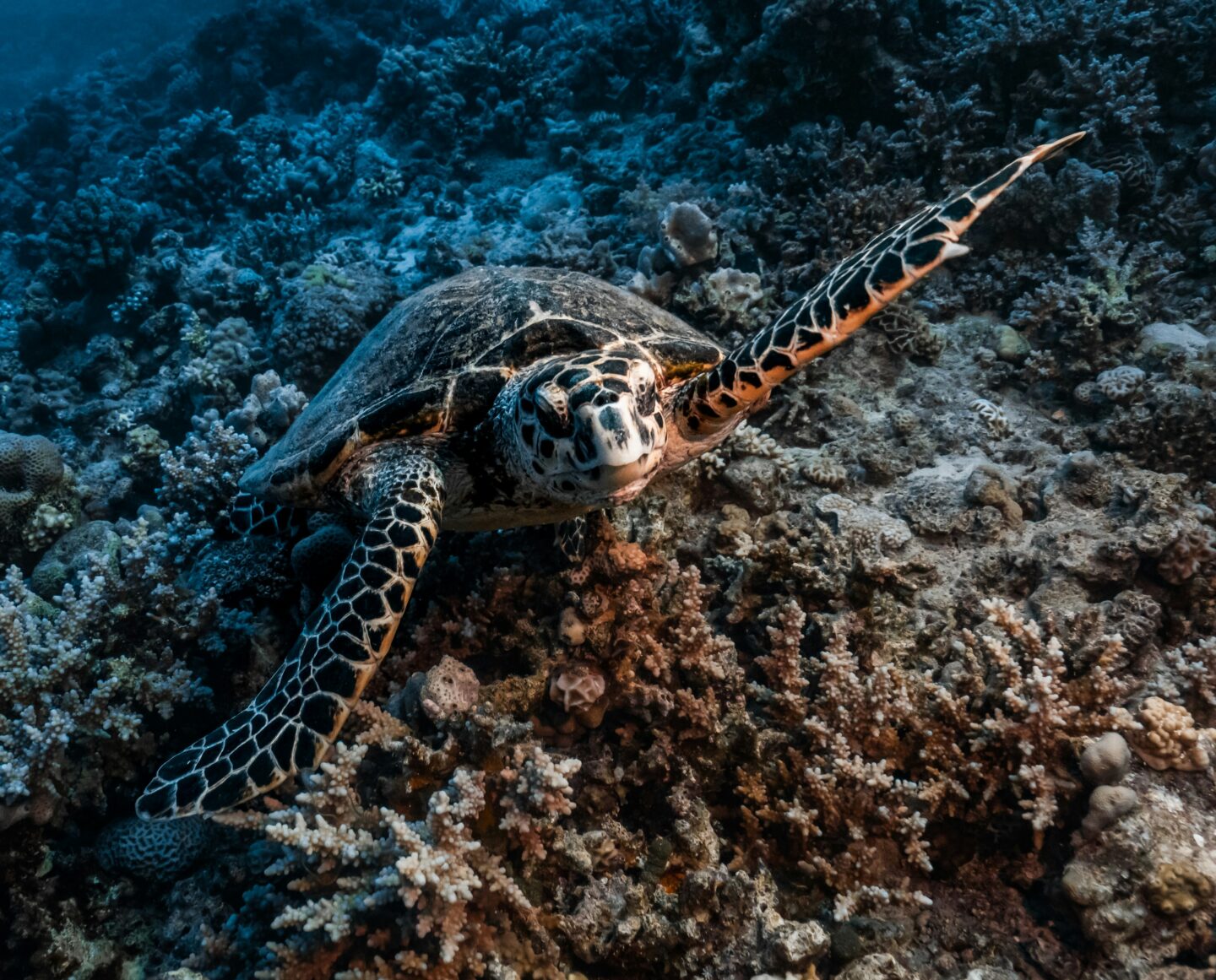
These turtles are vital in marine life as they help coral reefs stay healthy by eating sponges, sea anemones, and jellyfish. According to WWF, hawksbills are threatened by loss of nesting and feeding habitats, excessive egg collection, fishery-related mortality, pollution, and coastal development. However, illegal wildlife trade is the greatest threat.
The WWF also works with communities to reduce turtle harvesting and local trade in the Coral Triangle while protecting these species by stopping the illegal trade of hawksbill products around the world.
Sea Cows
Sea cows are often described as the gentle giants of the marine world, and it fits. Manatees and dugongs move slowly through warm, shallow waters, their broad bodies and rounded snouts giving them an almost prehistoric stillness. Found across tropical and subtropical regions, from East Africa to Australia, they can reach up to four metres in length and weigh as much as 1,500 kilograms.
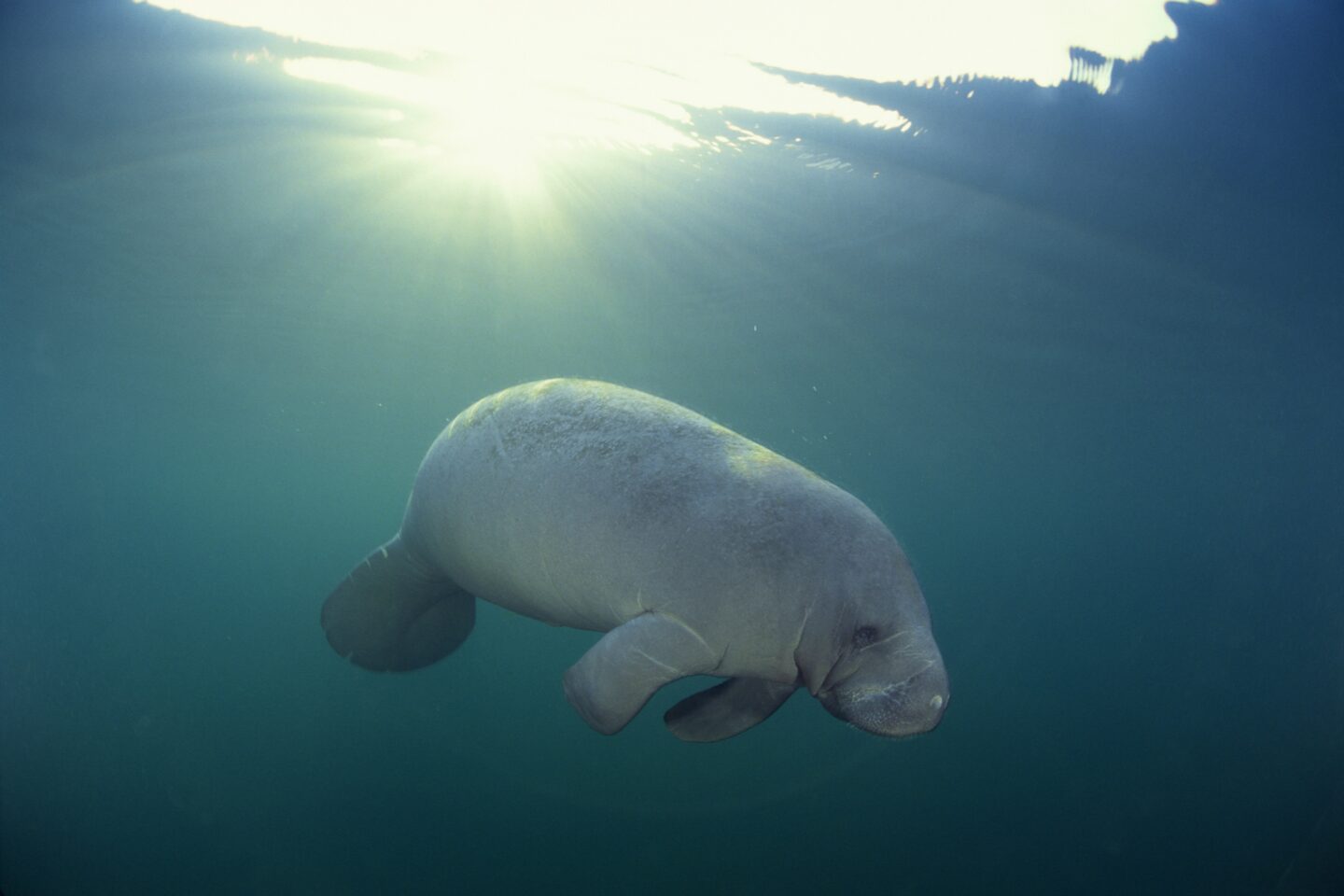
For all their size, they are remarkably vulnerable. Sea cows reproduce slowly, usually giving birth to a single calf, which makes any population loss difficult to recover from. History has already shown how quickly that decline can happen. The Steller’s sea cow was driven to extinction within just a few decades of its discovery.
Today, manatees and dugongs face quieter but equally persistent threats. Coastal development is eroding their habitats, boat traffic puts them at constant risk, and fishing gear continues to entangle them. Their survival depends less on dramatic intervention and more on consistent protection of the environments they rely on.
Humphead Wrasse
The humphead wrasse is one of the reef’s most distinctive inhabitants, where it is easily recognised by its pronounced forehead and thick lips. Often found across the Indo-Pacific, this long-lived species plays a quiet but vital role in coral ecosystems.
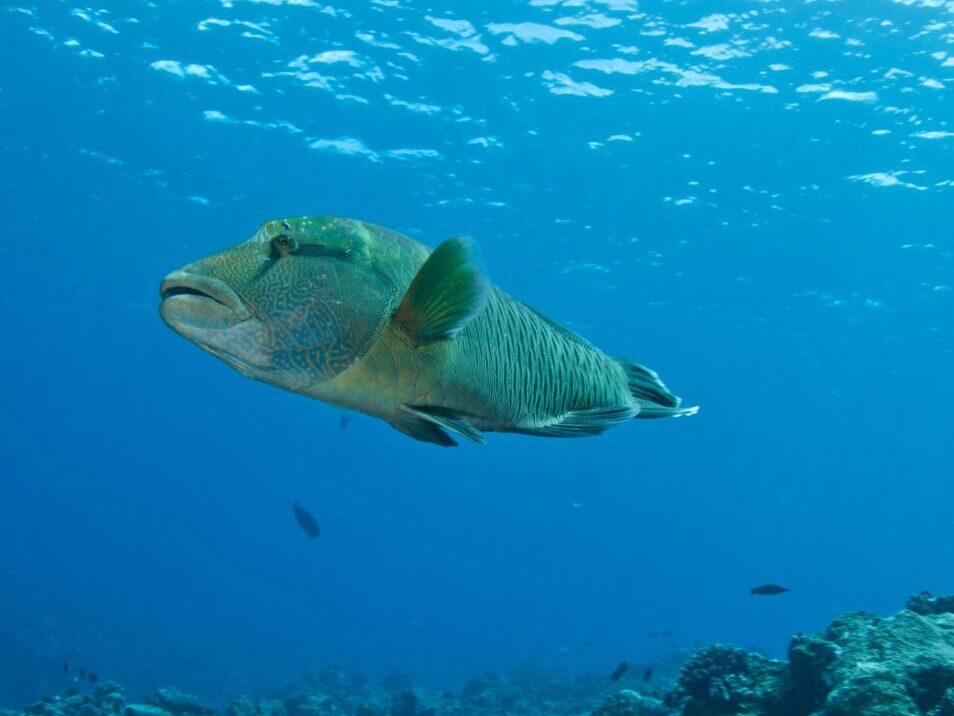
However, its demand as a luxury dish in parts of Asia has driven overfishing and destructive practices such as cyanide fishing, which later damages the very reefs it depends on. This method not only weakens coral structures but also disrupts entire marine communities. Its loss would be significant as this sea creature helps control crown-of-thorns starfish, a major threat to corals.
Sea Otters
Sea otters may not have the scale of whales or sea cows, but their role in the ocean is disproportionately important. Along coastal ecosystems in the North Pacific, they act as a keystone species, maintaining balance in ways that are not always immediately visible. By feeding on sea urchins, they protect kelp forests, which in turn support entire marine habitats and act as natural carbon sinks.
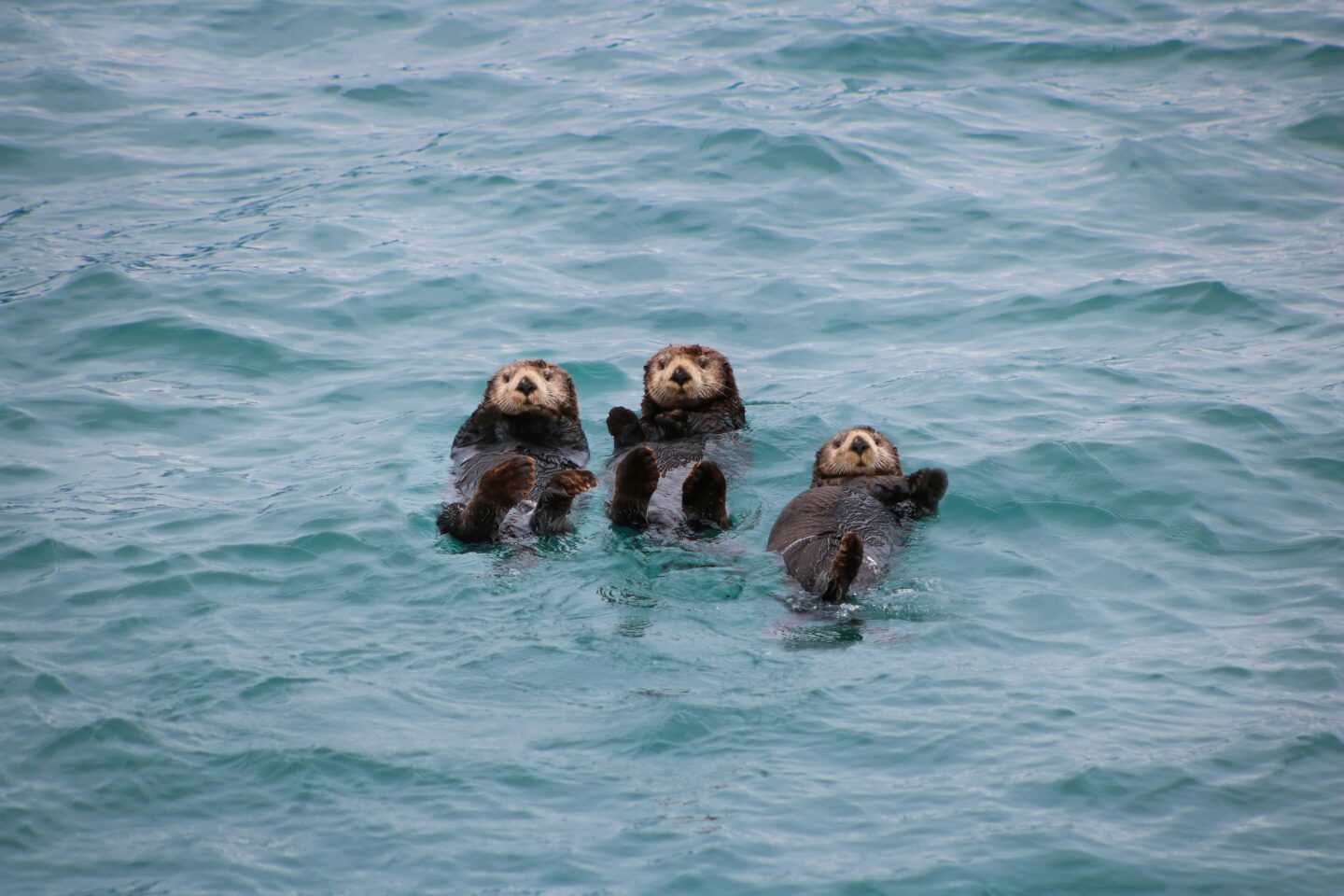
It is a quiet but essential relationship, and one that sits at the heart of marine ecosystem protection. Without sea otters, those kelp forests begin to disappear, and with them, much of the life they sustain.
Despite their importance, sea otters remain vulnerable. Oil spills, pollution, and habitat degradation continue to threaten their populations, particularly in regions where human activity overlaps with their coastal environments. Marine conservation on Earth Day often focuses on larger, more visible species, but the survival of animals like sea otters is just as critical to the health of the ocean as a whole.
Marine ecosystem protection and yachting
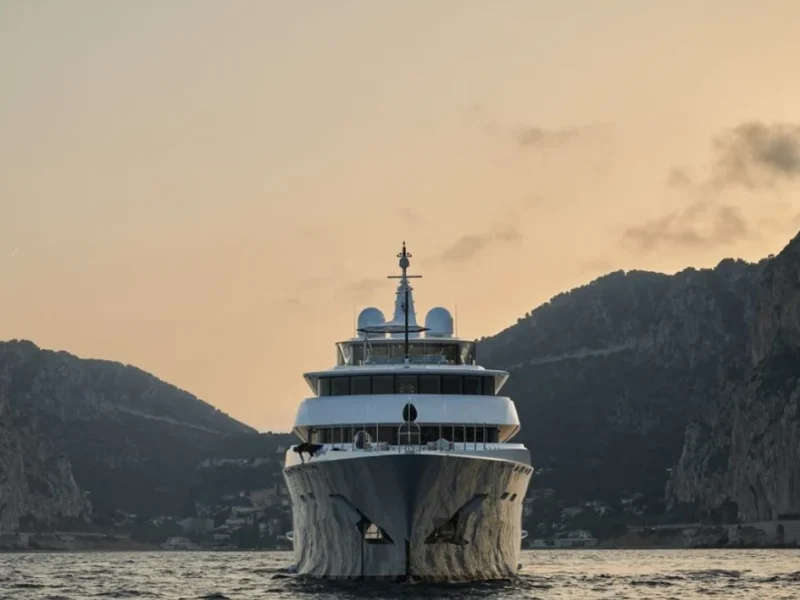
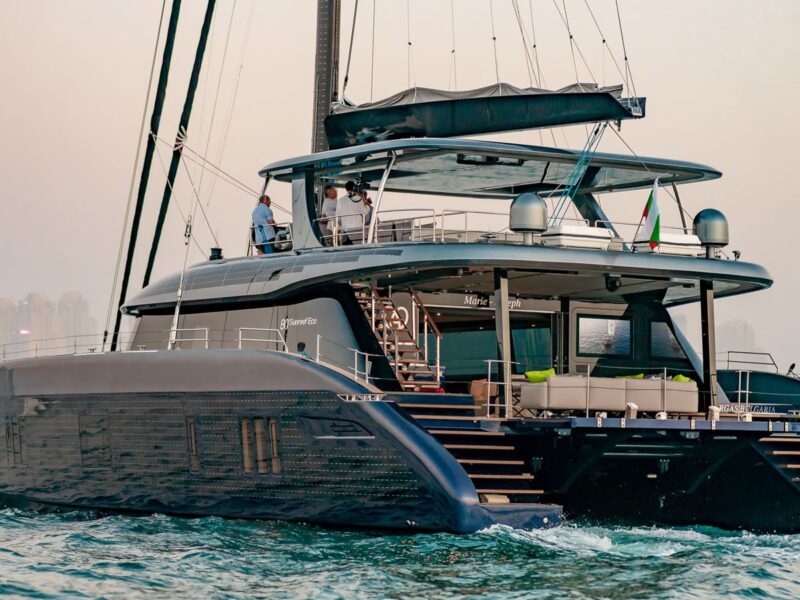
While it is true that the yachting industry is adopting more reef-conscious practices, the advocacy and commitment need to continue. Anchoring restrictions, reef-safe products, and partnerships with marine scientists are becoming more common across modern fleets. West Bay Shipyards is another great example, where they have adopted advanced propulsion technologies that reduce emissions and fuel dependency, as well as used more sustainable materials for yacht construction.
A growing cohort of expedition operators and conservation-minded yacht charters is working to protect the ocean life and its creatures. Companies such as Lindblad Expeditions and HX Hurtigruten Expeditions are partnering with marine scientists, while platforms like Happywhale are tracking whale movements in real time.
There are also yacht charters that are beginning to provide luxury with environmentally friendly initiatives (i.e. Yacht Carbon Offset) and conservation-led itineraries from providers like Y.CO and Burgess, integrating marine protection into the experience itself. With this, luxury travel doesn’t just witness the wild but contributes to its protection.
Marine Conservation Earth Day: a recap
Earth Day is a useful reminder, but marine conservation cannot be limited to a single moment in the calendar. The health of the ocean depends on ongoing awareness, better decisions, and a clearer understanding of how closely everything is connected.
From the largest whales to the smallest reef species, each plays a role in maintaining balance beneath the surface. Marine conservation on Earth Day is about recognising that responsibility, not just in theory, but in practice.
As travel continues to evolve, so too does its impact. The yachting industry, along with wider coastal communities, has the opportunity to support marine ecosystem protection in a more meaningful way. The real shift lies in moving beyond passive appreciation of these environments, and towards actively protecting what makes them worth experiencing in the first place.
TRENDING ARTICLES

FEATURED YACHT