There was a time when suggesting a catamaran yacht charter felt like offering the sensible option. More space, more stability, a bit less glamour – usually a little bit cheaper than a comparable motor yacht. Something you chose with your head rather than your heart. A shift around catamaran chat has happened quietly, but it has happened. Spend any real time on one now, and the appeal becomes obvious. And especially regarding the rise in environmental consciousness, the appeal of a more eco yacht charter one is something that refuses to quit.
What’s changed isn’t just the boats themselves, although that plays a part. It’s the way people want to travel. Slower, more connected to where they are, more environmentally friendly and less interested in the theatre of it all. Catamarans just happen to meet that moment very naturally.
Catamaran yacht charter: A quieter kind of comfort
On board a catamaran yacht charter, the first thing you notice is the stillness. Not complete stillness, you are still at sea, after all, but a kind of calm that feels different to being on a motor yacht at anchor. There’s no constant hum of stabilisers, no low vibration running through the boat. You sleep better without quite knowing why. Mornings feel less abrupt. You linger a bit longer over breakfast, then drift into the day without really deciding to.
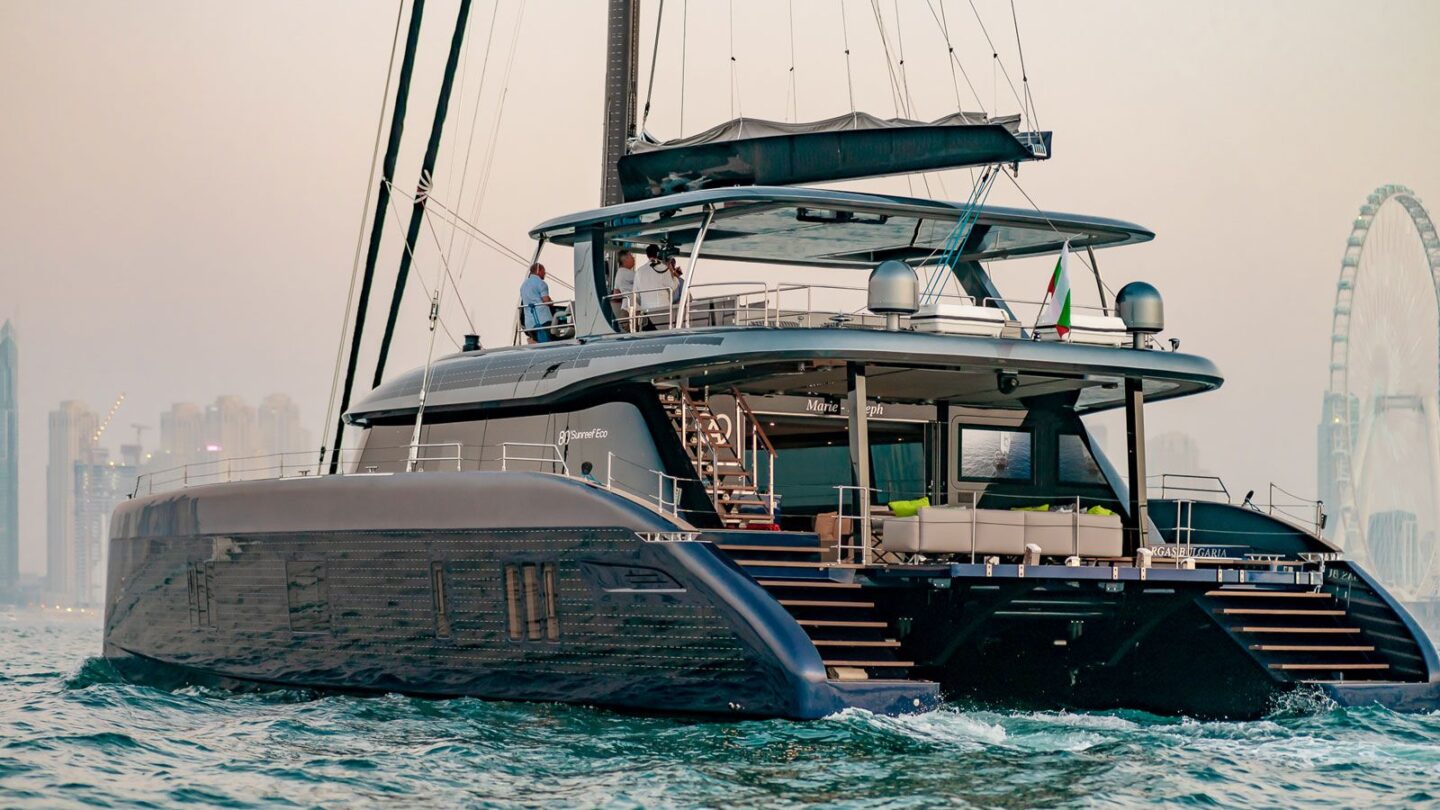
On newer models, that sense of calm is taken even further. The latest Sunreef 80s, for example, sit just over 24 metres in length with a beam of around 11.5 metres, creating a platform that is both wide and remarkably stable. Many now integrate hybrid propulsion and solar systems, not as a headline feature, but as part of a quieter, more considered onboard experience.
Space that actually works
Catamarans have always offered volume, but what’s changed is how that space is used. A Sunreef 80 delivers roughly 300 to 340 square metres of living space, which is why it feels closer to something much larger than its 24-metre length suggests. The layout flows horizontally rather than vertically, so instead of moving between decks, you tend to stay in one continuous space that opens directly onto the sea.
The Lagoon Seventy 8 takes a slightly different approach but lands in a similar place. At just under 24 metres with an 11-metre beam, it feels more like a floating villa than a traditional yacht, particularly when you’re at anchor, and everything is opened up. You don’t move through it in stages; you settle into it. That’s the difference. You’re not navigating the boat. You’re living on it.
Closer to the water
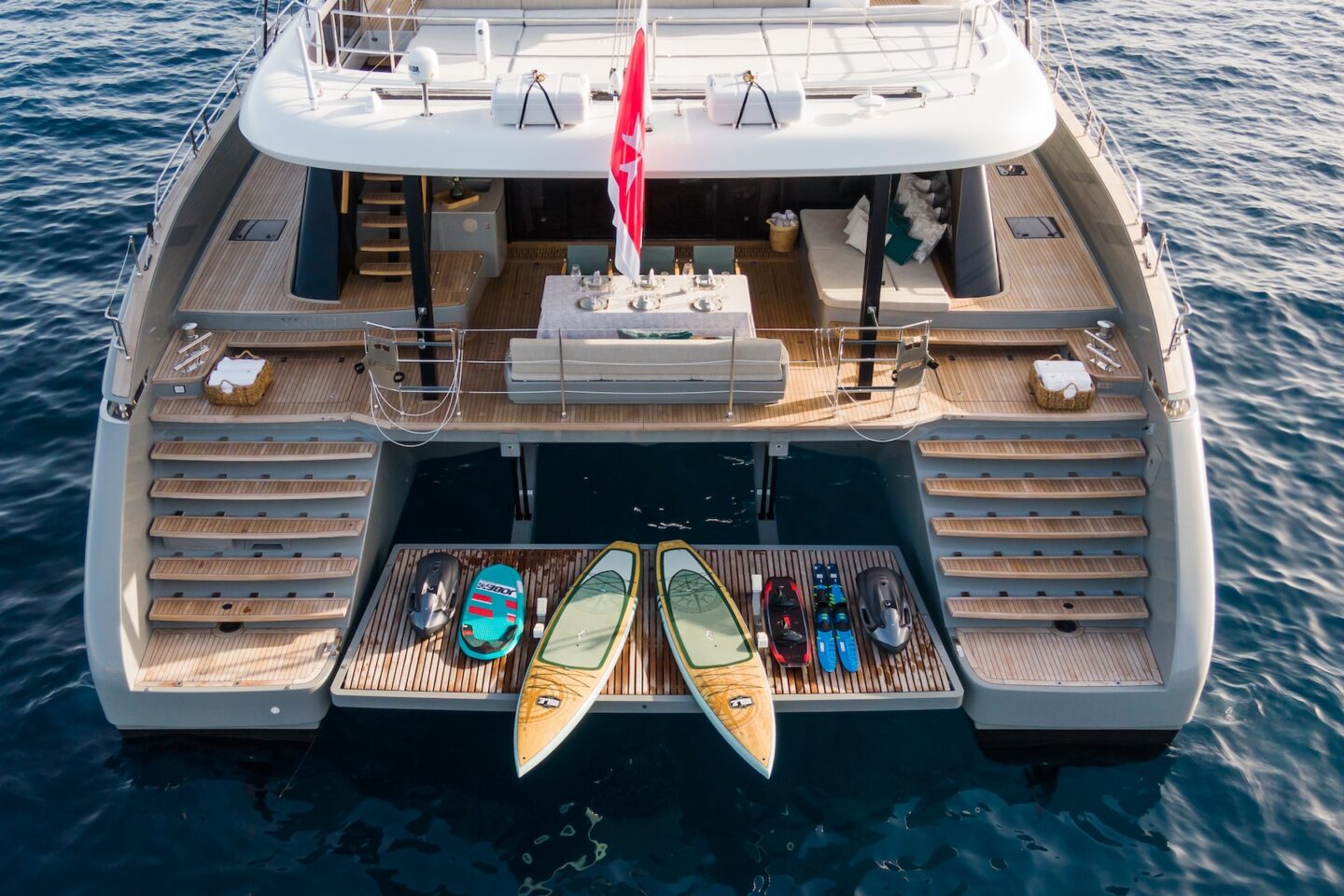
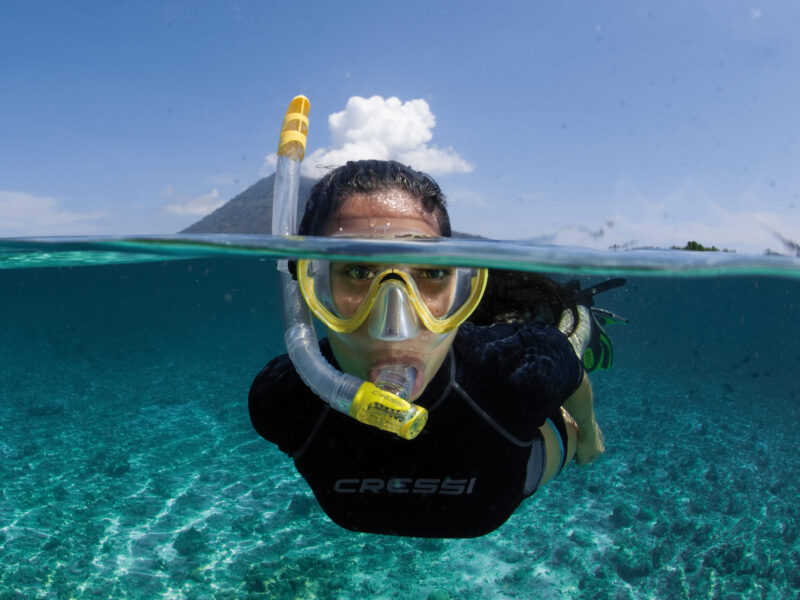
Catamarans change your relationship with the sea in a way that’s difficult to fully appreciate until you’ve experienced it. You’re never far from the water. The aft decks sit lower, access is easier, and you stop thinking about swimming as something you organise. You just slip in, climb out, sit on the edge with your feet in, then drift back again. A paddleboard becomes part of the morning rather than a planned activity. Snorkelling happens because it’s there, not because it’s scheduled. It sounds simple, but it completely alters the rhythm of a day.
Access, not just arrival
The shallow draft is often mentioned as a technical advantage, but in reality, it’s one of the most important experiential ones. Being able to anchor closer to shore or in shallower bays means you’re often somewhere quieter, slightly removed from the main flow of traffic.
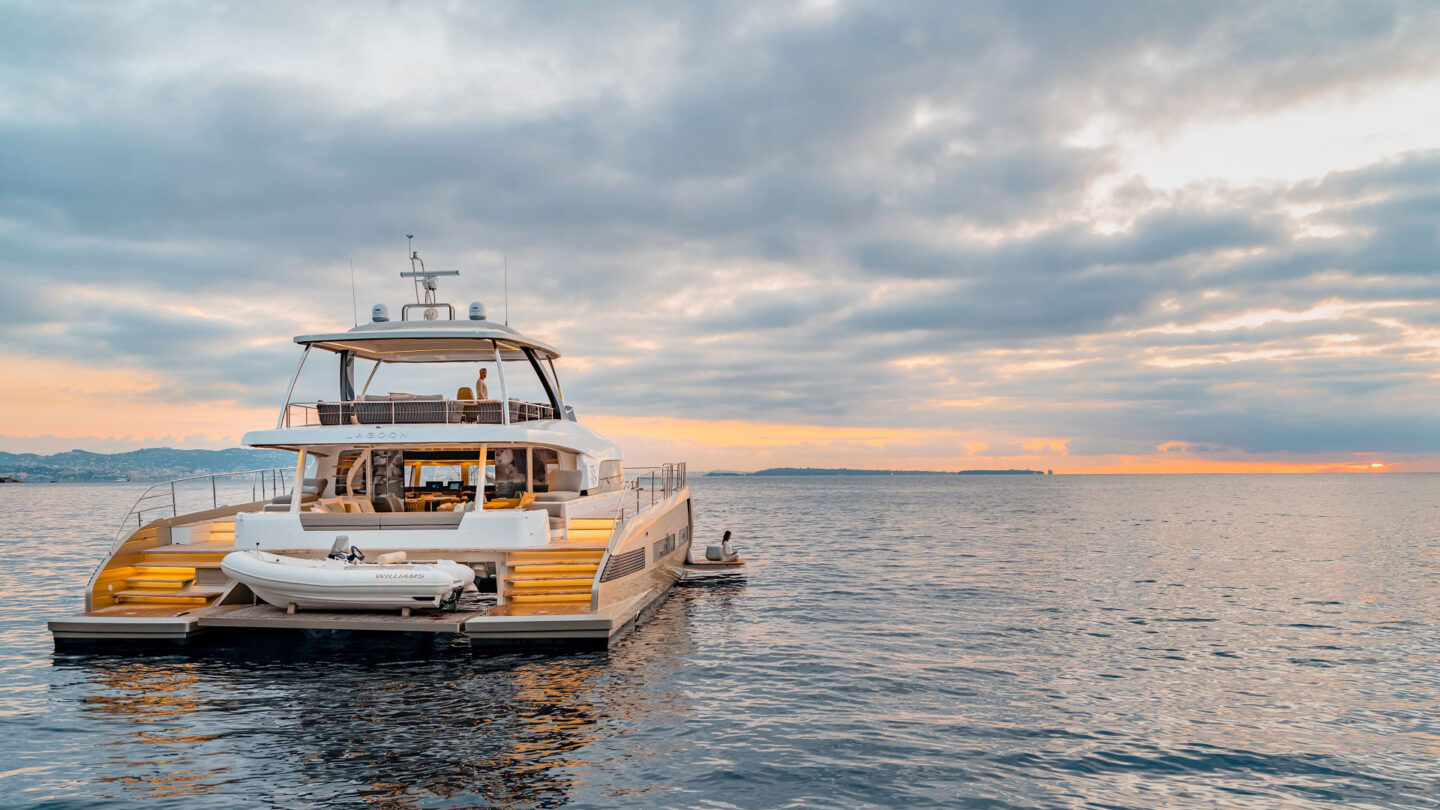
In the Caribbean, that might mean dropping anchor in water that feels almost unreal. In the Mediterranean, it can be the difference between sitting just outside the crowd and finding a pocket of space that feels your own. It’s not about getting somewhere first. It’s about where you stay once you’re there.
Eco yacht charter: A more natural fit for modern travel
Perhaps the biggest reason catamarans are having this moment is that they align with how people want to travel now. There’s a growing emphasis on sustainability, not as a statement, but as a baseline. More efficient hulls, lower fuel consumption, and the rise of hybrid and electric systems all contribute to a lighter way of moving through the water. Boats like the Sunreef 80 Eco, for example, integrate solar panels and energy regeneration systems to support longer, quieter cruising with reduced impact.
At the same time, travellers are placing more value on space, privacy and flexibility. Catamarans, with their wide beams and separated hulls, naturally lend themselves to families or groups who want to spend time together without feeling confined.
So why charter a luxury catamaran now?
A catamaran yacht charter is a quieter kind of luxury. Part of it is design, part of it is technology. But a big driving force behind the rise in luxury catamarans is that travel has shifted. The focus is less on arrival and more on how you spend your time once you’ve arrived. Less on what something looks like, more on how it feels. And perhaps most importantly, what kind of environmental impact are we leaving.
Catamarans don’t try to compete with motor yachts on speed or scale. They don’t need to. They offer something different. A slightly softer, more liveable way of being on the water. And once you adjust to that pace, to that quiet, to that way of moving through a place rather than passing through it, it becomes very difficult to go back.
TRENDING ARTICLES

FEATURED YACHT