With the recreational boating sector responsible for an estimated 16 million metric tons of CO₂ annually, there is no escaping the fact that yacht charter is a resource-intensive way to travel. At the same time, as environmental conversations continue to accelerate in 2026, so too does the expectation that travel, in all its forms, becomes more considered. The question is no longer whether yacht charter has an impact, but how that impact can be reduced.
From vessel choice to onboard habits, itinerary planning and provisioning, there are practical ways to approach a more sustainable yacht charter. Not perfect, but more informed, more deliberate, and ultimately more responsible.
Sustainable yacht charter: Rethinking the yacht itself
Judging a yacht’s environmental impact was once largely guesswork. Smaller was often assumed to mean cleaner, but in practice, system design, efficiency and how a yacht is operated can matter just as much as size.
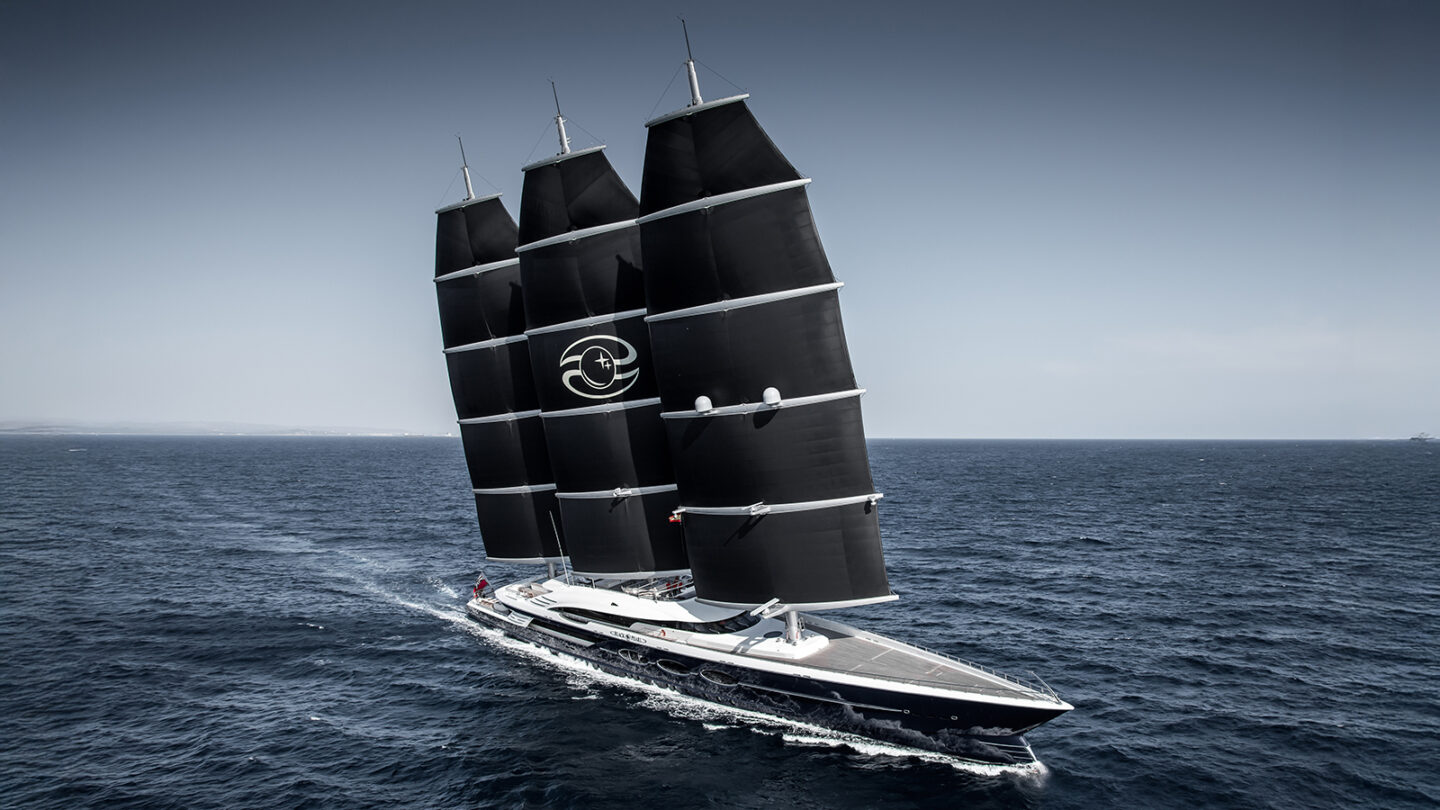
Sailing yachts still tend to have a lower operational impact than motor yachts, but advances in technology are beginning to shift that balance. Choosing a vessel that is appropriate for your group size, rather than a larger yacht running half empty, can also make a meaningful difference. That said, it’s increasingly important not to generalise. Some of the most significant sustainability innovations are happening on larger yachts.
Formerly known as Project 821, Feadship’s 118.8-metre Breakthrough made headlines in 2025 as the world’s first fuel-cell-powered superyacht. Its 3.2mW fuel-cell system runs on cryogenic liquid hydrogen stored at -253°C, producing only water as a byproduct while powering onboard systems and enabling zero-emissions coastal cruising.
While Breakthrough is not yet available for charter, other forward-thinking vessels are. The 76.6-metre explorer yacht Yersin, built by Piriou, holds Bureau Veritas Clean Ship classification, was constructed from 95 percent recyclable materials and has been chartered for scientific expeditions.
Similarly, Heesen’s 49.8-metre Orion, which joined the charter fleet in 2026, combines a Fast Displacement Hull Form with a hybrid propulsion system, allowing for reduced fuel consumption and quieter, lower-impact cruising.
Destination and itinerary matter
The sustainability of a yacht charter extends far beyond the vessel itself. Where you go and how you move can significantly shape the overall impact of your trip. As demand grows for remote, untouched destinations, it is important to recognise that these are often the most environmentally sensitive. Increased access can bring unintended consequences.
Leah Werner, Executive Director at Water Revolution Foundation, explains: “Yachts often cruise in some of the most sensitive ecosystems in the world, and these are often the most in demand – there is a reason why they are protected so much. Certain cruising areas have stricter environmental rules, better marina infrastructure and clearer standards for anchoring, waste disposal and wildlife protection. Choosing a place with stronger environmental safeguards is key to avoiding damage to the very ecosystem we’re trying to travel to.”
A well-planned and streamlined itinerary that avoids unnecessary mileage will naturally reduce fuel consumption. Minimising the number of flights taken to reach the yacht, and choosing rail or road transport where possible, can also help lower the overall footprint of a trip.
The role of yacht crew and daily operations
Often overlooked, the day-to-day operation of a yacht is where some of the most meaningful changes can happen.
Kelly Gordon, Captain of the 43-metre Pershing motor yacht Cabo, explains the impact which yacht senior management can have in this area: “As captains, we can implement smart itinerary planning to reduce unnecessary fuel burn, run at optimal cruising speeds, use shore power when available, implement strict recycling and waste management systems, and make eco-friendly choices onboard, like eliminating single-use plastic packages and utilising water makers vs bottled water and so forth.”
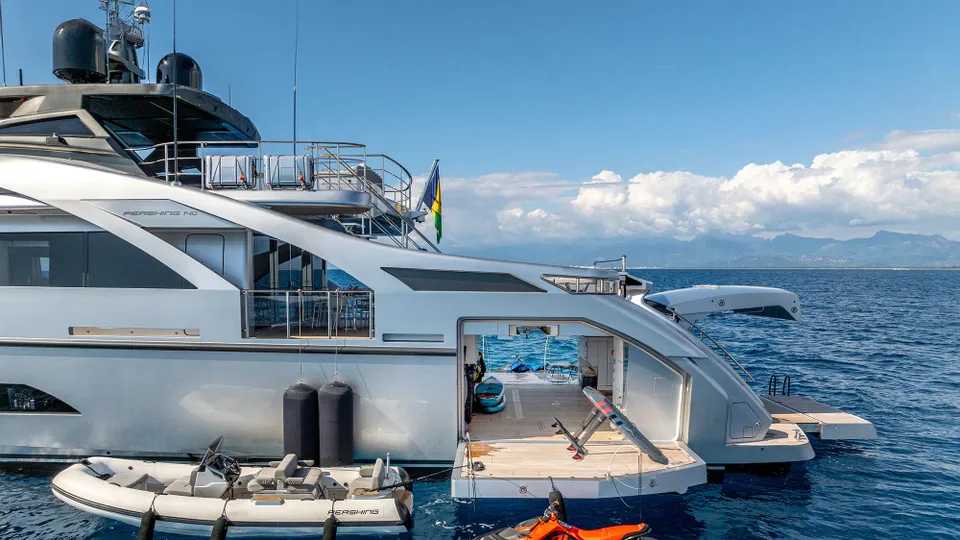
For Kelly, it is about captains leading by example. “As a captain, you set the culture. If you treat sustainability as a box to check, your crew will too. If you treat it as seamanship and professionalism, they’ll rise to that standard.”
From guidelines to measurable change
Industry-wide efforts are also helping to move sustainability beyond intention and into action. Water Revolution Foundation, a non-profit organisation headquartered in Amsterdam, has released the second edition of its Environmental Crew Guidelines, which are free and accessible to all.
Created in collaboration with Danella Hopkins, former chief stew on board the 106.7-metre sailing superyacht Black Pearl, alongside the superyacht refit and repair group MB92 Group, the guidelines offer a comprehensive source of inspiration to encourage eco-friendlier practices onboard yachts, from the chef to the purser, deckhand and chief stew.
Far removed from greenwashing, the Environmental Crew Guidelines provide detailed, practical strategies for crew in all departments to make a measurable difference for a more sustainable yacht charter. These range from responsible provisioning and purchasing choices to conserving water, mindful waste management, energy usage and the use of sustainable cleaning products.
Tools developed in the last decade, such as Water Revolution Foundation’s YETI (Yacht Environmental Transparency Index), provide a scientific, standardised method for assessing the environmental footprint of new and existing yachts through ‘ecopoints’ measuring operational performance across multiple impact factors.
The role of the guest
For all the focus on yachts and crew, the guest remains a powerful and often underestimated influence. As Captain Kelly highlights, prospective travellers have more power to influence choices for a more eco-friendly yacht charter than they might expect. “Guests have more influence than they realise! They should be mindful of provisioning excess, support local sourcing, respect protected areas and ask about sustainability practices before booking. The more the industry hears that guests care, the faster the changes will happen.”
And, according to Leah Werner, potential charter guests have been doing precisely this. “Interest in environmental performance is absolutely growing, and particularly among younger charter clients. We are seeing a broader shift across the travel sector towards experiences that are delivered more responsibly. So over time, it’s likely to influence expectations within the charter market as well.”
A more realistic definition of sustainable yacht charter
The choice to travel, whether by plane, yacht, car or rail, will always raise challenging questions where sustainability is concerned. In a world where we are not yet ready to give up travel altogether – and the eco-friendly alternatives that we all desire are not quite there yet – the focus shifts towards making informed and conscious decisions. For a sustainable yacht charter, that means better vessel choices, smarter itineraries and more responsible behaviour onboard.
Advances in green engineering are being made, but a charter yacht may never be entirely sustainable. But it can be more thoughtful, more efficient and more accountable than it once was. And increasingly, that is what defines modern luxury: not just where you go, but how you choose to get there.
TRENDING ARTICLES


FEATURED YACHT