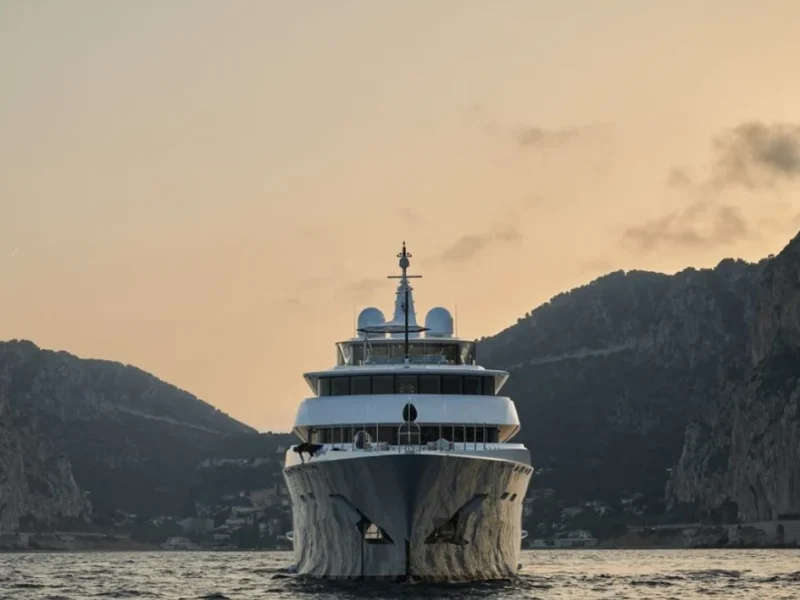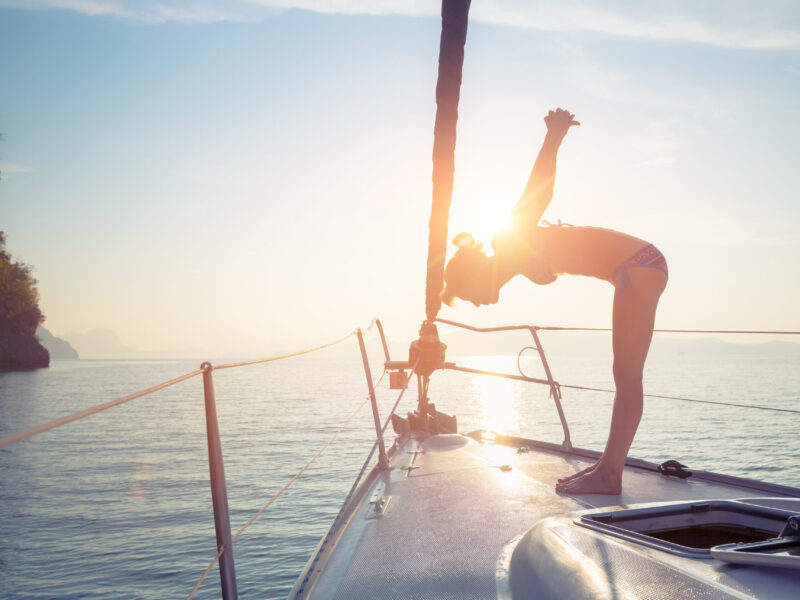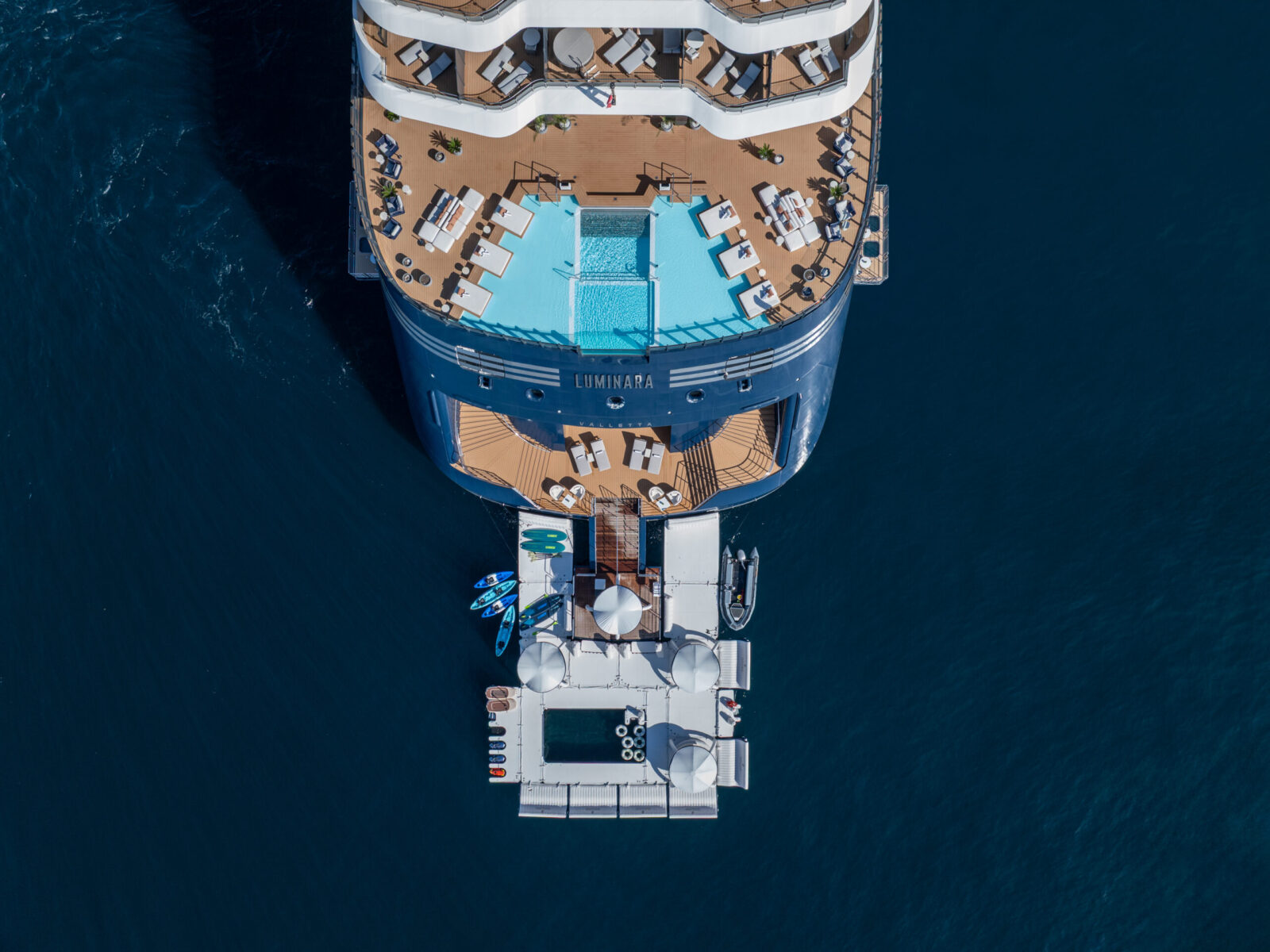
Since the beginning of the decade, long-established luxury hospitality brands, including Aman, Four Seasons and Ritz-Carlton, have undergone a notable shift with the development of their own hotel-led yachts. Bridging the gap between land-based five-star service and private yacht charter, these vessels are far removed from a typical cruise experience, offering a more considered approach to luxury travel at sea, defined by privacy, access and increasingly, wellness.
A new era of luxury travel at sea
Award-winning US-based designer Carla Guilhem, whose work spans superyachts such as the 34-metre Van der Valk M/Y Lady Lene (2021) as well as high-end hospitality and residential projects, has observed this crossover first-hand. She explains that it functions both as a natural extension of the brands themselves and as a gateway into yachting for first-time clients.
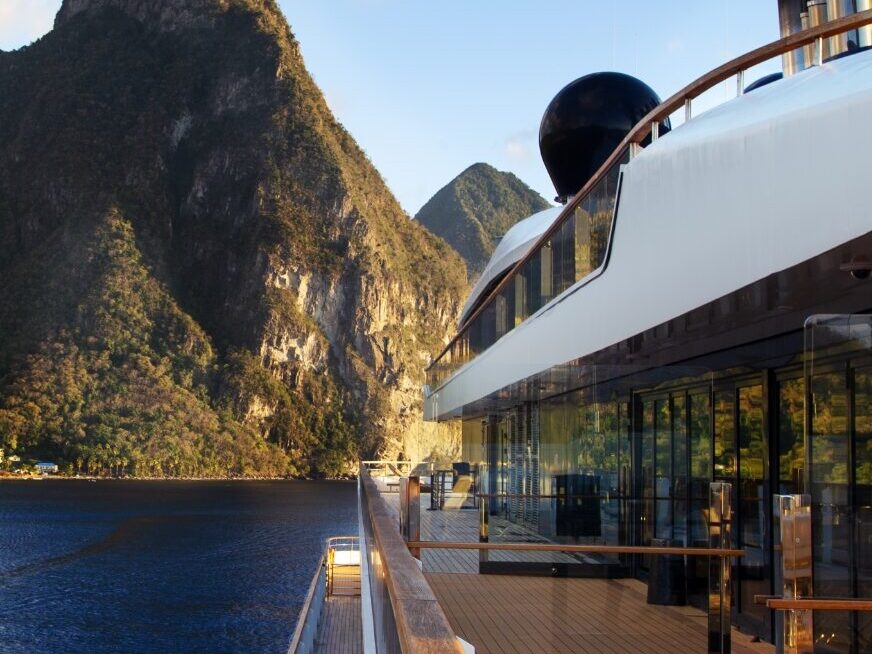
“This is a clever way of moving the kind of experience offered by these brands from the land to the sea, which is a very good showcase for the brands. And it also acts as a complement to the land-based services they are offering, so that more people can experience both together.”
She continues: “People might be cautious about taking that leap towards having a yacht of their own or even chartering with a group, because they’ve never tried it before. Spending time on a hotel-led yacht could therefore act as the first step on that journey.”
Hotel-led yachts, not high-end cruises
When describing this emerging category, those behind the concept are quick to emphasise what these vessels are not: high-end cruises. Vlad Doronin, Owner, Chairman and CEO of Aman Group, whose 180-metre, 47-suite yacht Amangati is set to launch in spring 2027, explains the rationale behind the move.
“Currently, there is nothing that truly sits between traditional cruising and private superyacht charter. The market has shown that there is demand for more private and refined experiences at sea. Many existing products feel like cruises, only more luxurious.”
He continues: “Aman has always held its own space in luxury hospitality, and Amangati is in a category of its own. Guests do not feel they are buying a ticket; they feel they are living in their own private yacht, with the space, calm and intuitive service that defines Aman. For me, true luxury is about space, privacy, time and experience.”
Service and experience, not scale
As demand shifts towards more experience-led travel, the appeal of these hotel-led yachts becomes clearer. Travellers are moving away from traditional markers of luxury, scale, spectacle and material excess, and towards something more considered, where service, wellness, and overall experience take priority.
In this sense, the move from brands such as Four Seasons, Ritz-Carlton and Aman feels aligned with wider changes across both luxury travel and yacht charter. Their decades of expertise in service, design, wellness and guest experience are now being applied at sea.
Doronin explains: “To staff Amangati, we are drawing from Aman properties globally, including experienced hosts and butlers who already understand our standards of service and discretion. At the same time, we are bringing in specialists from the world of ultra-luxury maritime operations.”
Redefining wellness at sea
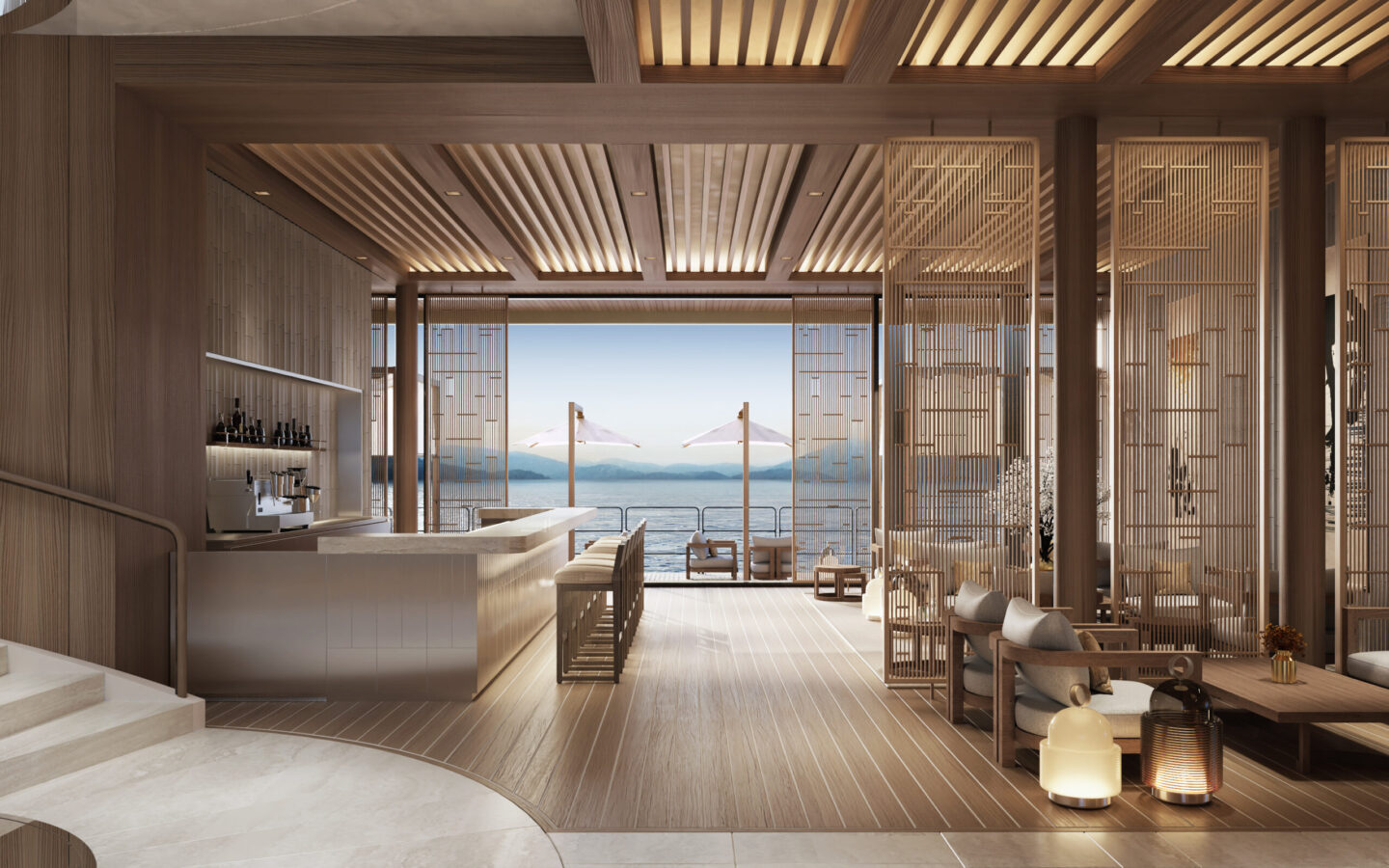
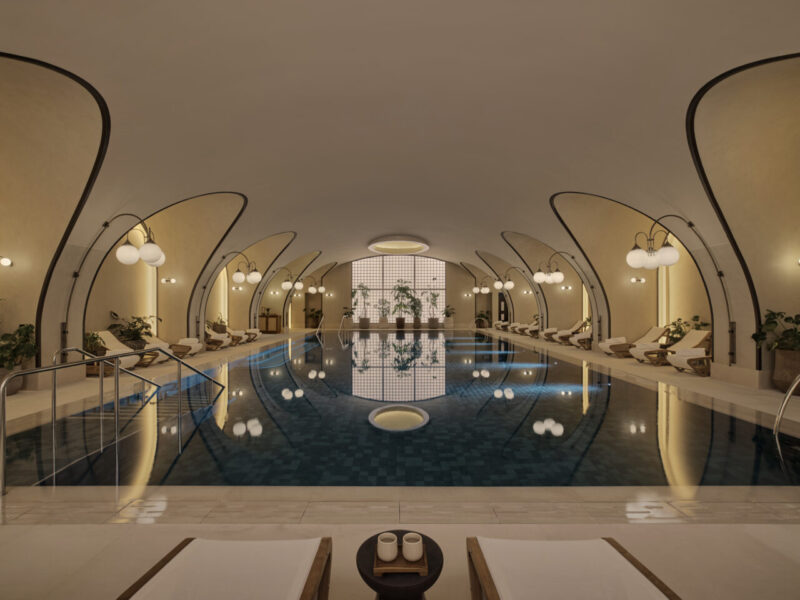
With Amangati set to offer one of the largest spas in luxury yachting, including eight treatment rooms, a Japanese serenity garden, a banya, hammam, and Medi Spa, the role of wellness on board is being redefined.
This shift reflects a broader movement within luxury hospitality. As Guilhem notes, “These days, you see more hotels which are completely focused on wellness and on promoting longevity. It is about far more than just spending a night somewhere.”
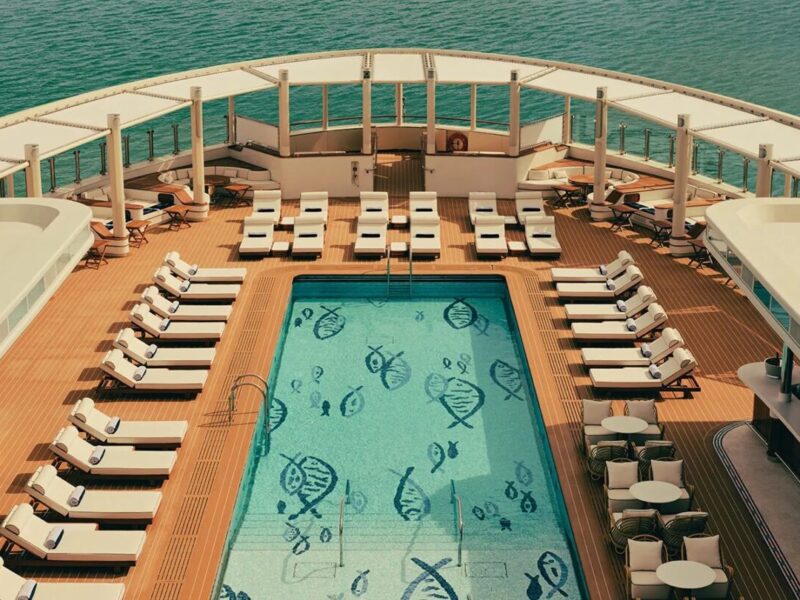
On board the Ritz-Carlton Yacht Collection (including Evrima, 2022; Ilma, 2024; and Luminara, 2025), wellness spaces feel closer to boutique hotel spas than traditional onboard facilities, with treatment rooms, saunas, steam rooms, relaxation lounges and integrated fitness centres.
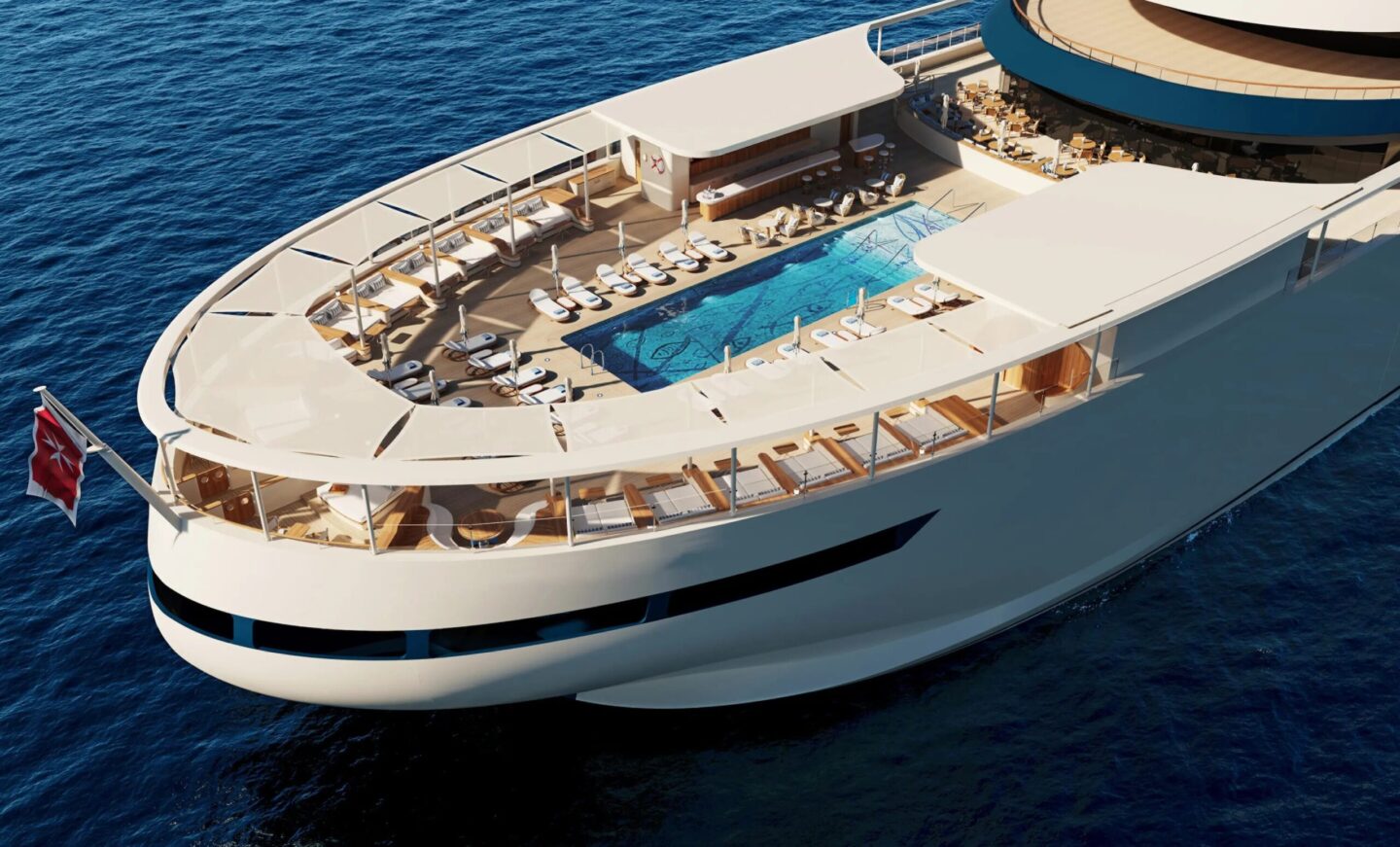
Similarly, Four Seasons Yachts, whose first vessel launched in March 2026, positions wellness as central to the experience. L’Oceana Spa includes a hammam and thermal circuit, alongside treatments ranging from infrared therapy and cryotherapy to tailored fitness and recovery programmes. In this context, the spa is no longer an amenity, but a defining part of the journey itself.
Access, redefined
If luxury hospitality brings service and structure to sea, yachting offers something equally valuable in return: access. Beyond established destinations such as the Mediterranean and the Caribbean, these hotel-led yachts are expanding into more varied itineraries. The Ritz-Carlton Yacht Collection, for example, includes routes across Alaska, Asia Pacific and the South Pacific, while Four Seasons offers longer, more immersive journeys such as its ‘Grand Atlantic’ crossing.
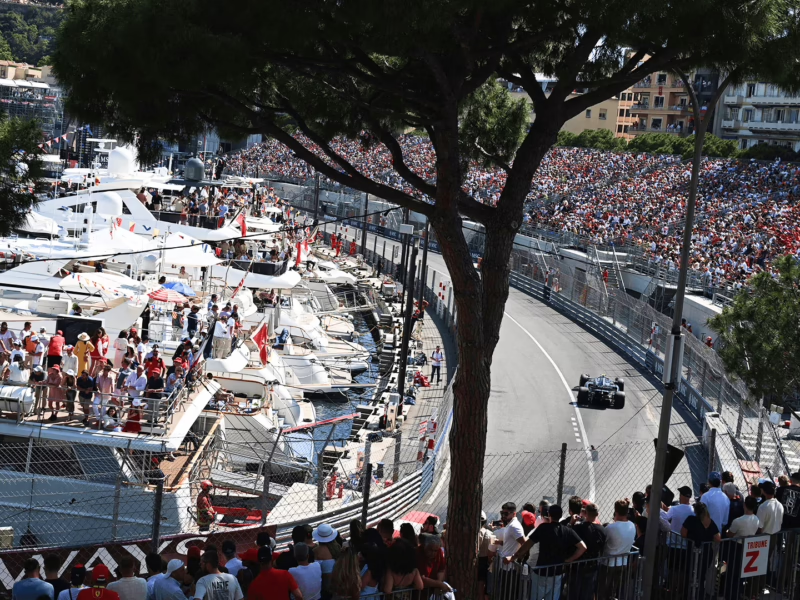
For those looking to experience major cultural events without the usual constraints, these yachts are also positioning themselves strategically. As Doronin explains, itineraries are built around key moments such as the Cannes Film Festival and Monaco Grand Prix, allowing guests to experience them in a more seamless way.
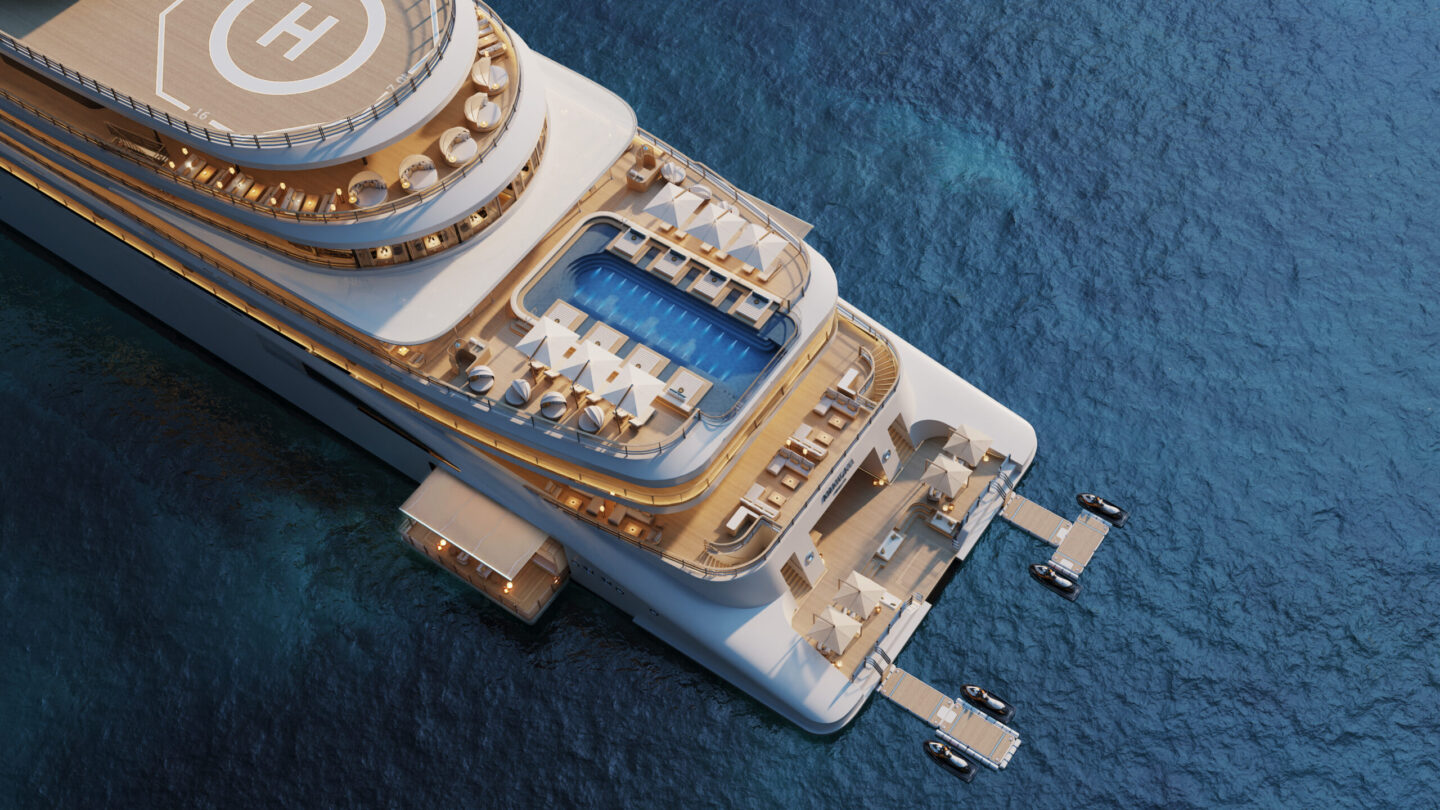
He adds: “We also connect closely with our Aman resorts, using our helipads and tenders to give guests complete freedom to combine sea and land in one journey.”
A shift in what luxury looks like
As travellers place increasing value on lifestyle, wellbeing and experience, hotel-led yachts represent a natural evolution of both luxury hospitality and yacht travel.
What is emerging is not simply a new category, but a different way of thinking about time at sea. Less about scale and spectacle, more about how a journey feels. The markers of luxury are shifting accordingly. Less focus on excess, more on space, calm and intention. And in that shift, the idea of luxury travel at sea is being quietly redefined.
TRENDING ARTICLES

FEATURED YACHT