Chartering a yacht tends to come with a certain mystique. It is often spoken about as if it exists in a world of its own, with its own rules, language and assumptions. In reality, it is far more straightforward than it appears, and once you understand how it works, it becomes much easier to navigate.
Most of the yacht charter FAQs people have are the same: around cost, timing, what is included, and how it all actually comes together. Here, we break those down properly, so you know what to expect before you step on board.
Yacht charter FAQs: what to know before you go
What does a yacht charter cost?
This is usually the first question, and understandably so. A luxury yacht charter is made up of a few key components. The headline figure is the charter rate, which covers the yacht itself, the crew, insurance, and onboard equipment such as tenders and water toys.
On top of that, there is VAT, depending on where you are cruising, and the APA (Advance Provisioning Allowance), which is typically around 30 to 40% of the charter fee. This is used to cover the running costs of your trip, fuel, food, drinks, marina fees and anything else that comes up along the way.
It is worth knowing that this is not a fixed spend. The APA works more like a running tab. At the end of the charter, the captain will present a full breakdown, any unused amount is returned, and any additional costs are settled before you leave.
There can also be delivery fees if the yacht needs to reposition to meet you, which will be clearly defined within the yacht charter cost terms. In terms of payment, a 50% deposit is usually required when the contract is signed, with the balance due around a month before the trip begins.
Do you need to tip the crew?
In short, yes, yacht charter tips are expected, but it is also entirely at your discretion. A crew gratuity is typically given at the end of the charter to reflect the level of service you have received. As a guideline, most guests leave between 10 and 20% of the base charter rate.
It can feel like a significant amount, but it is worth remembering that the crew are responsible for everything on board, often working long hours behind the scenes to make the experience feel seamless.
When should you start planning a charter?
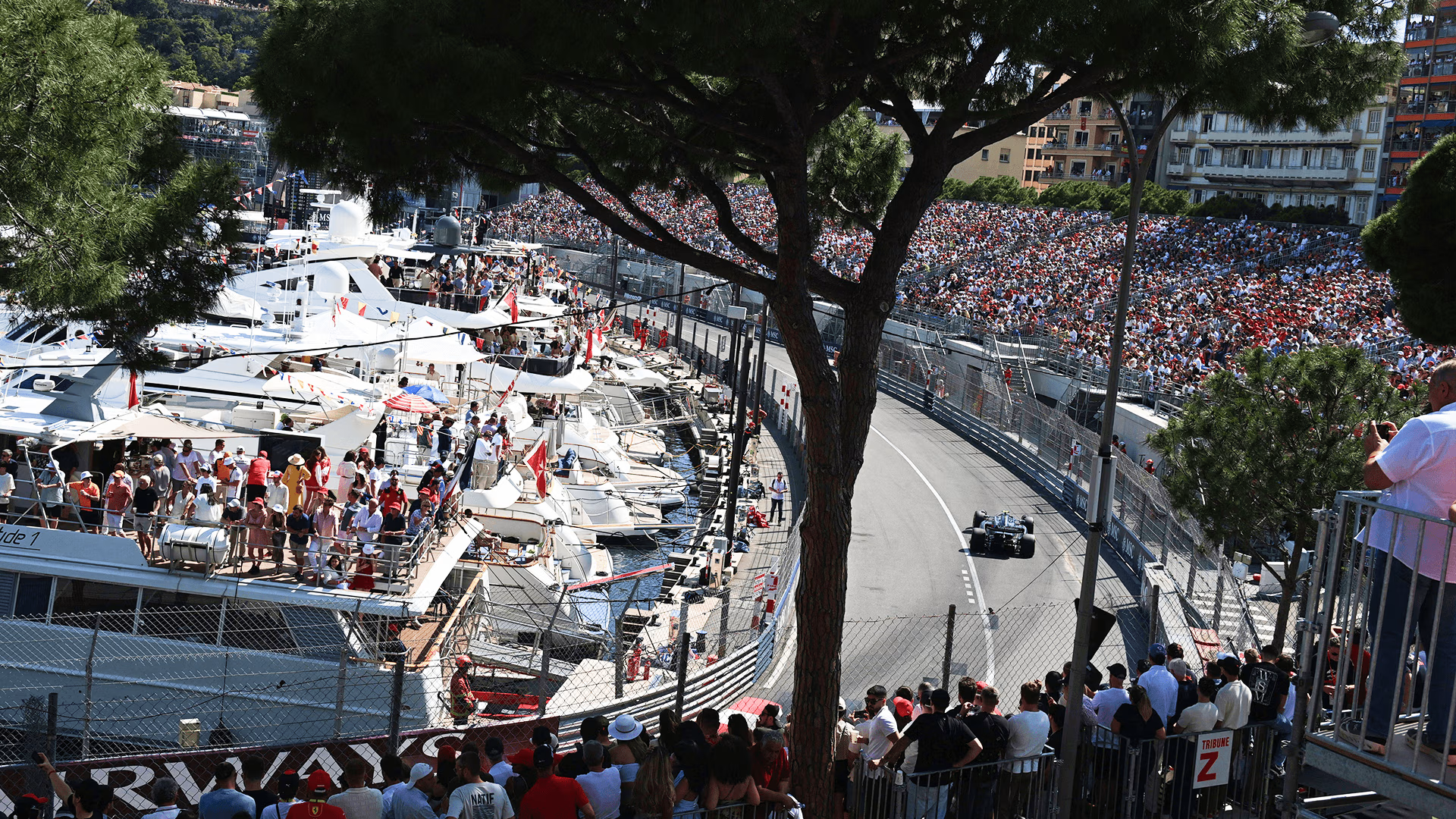
Timing for your charter depends largely on where you want to go. If you are looking at peak season, July and August in the Mediterranean, or the winter months in the Caribbean, it is worth starting the process six months to a year in advance – more in some particularly sought-after spots around key events like the Monaco Grand Prix or Cannes Film Festival. This gives you the best choice of yachts and allows for a more considered itinerary.
Outside of peak periods, things tend to be a bit more flexible. Three to six months is usually enough, and even last-minute charters can work, particularly if you are open to location and style.
How many people can you bring?
Most yachts accommodate up to 12 guests overnight, which is the standard limit for private charter yachts due to safety regulations. Larger vessels can sometimes accommodate more, and there are plenty of luxury charter yachts designed to do just this, but this depends on their classification.
You can usually have additional guests join you during the day, for lunch or a special occasion or party on board, but there will be strict passenger limits and restrictions.
What is actually included on board?
The easiest way to think about a yacht charter is as a highly personalised version of all-inclusive travel, just taken to another level. The base charter rate covers the yacht itself, the crew, and all onboard equipment, from tenders to water toys. Beyond that, most of what you consume and experience on board is covered by the APA, which serves as the trip’s working budget. This includes fuel, food, drinks, marina fees and anything else required to run the yacht according to your preferences.
In practice, this means very little is fixed. Once your preference sheet has been shared, everything is tailored accordingly, from what is stocked in the fridge to how meals are served and when. You are not choosing from a set offering, but shaping it as you go.
It is this combination, a fully crewed yacht with a flexible, all-encompassing running budget, that makes the experience feel seamless. Everything is taken care of, but nothing feels standardised.
Do you need any experience at sea?
Not at all. Charter yachts come fully crewed, with a captain and team responsible for everything from navigation to safety and service, so there is no expectation for you to have any prior experience at sea.

Your role is simply to enjoy the experience. The crew handles the operation of the yacht, allowing you to relax and focus on your time on board. While being comfortable in the water can enhance the experience, particularly if you plan to swim or use water toys, it is not essential.
What does a day on a yacht actually look like?
There isn’t really a “typical” day, and that’s kind of the point with a luxury yacht charter. Some days are more about where you are, arriving somewhere you actually want to spend time, anchoring early, getting in the water, and staying there. Other days are looser, moving between places, stopping when something looks good, figuring it out as you go.
The difference is that nothing is locked in. If somewhere feels right, you stay longer. If it doesn’t, you move on. Lunch plans change, routes shift, and the day adjusts around you rather than the other way around. It’s less about following an itinerary and more about having one that can bend.
It is simpler than it sounds
From the outside, chartering a yacht can feel unnecessarily complex, with different yacht charter costs, terms and moving parts to figure out. In practice, once the basics are clear, it becomes far more straightforward than most people expect. A good broker handles the planning, the crew takes care of everything on board, and the structure falls into place quickly. What remains is simply how you choose to spend your time, where you go, how long you stay, and what you want each day to look like. It is less about managing the details and more about having the space to enjoy what you have planned.
TRENDING ARTICLES


FEATURED YACHT