For many of us when travelling, culture is something that is presented. It is scheduled, explained, and often performed in ways that make it easy to observe, but harder to truly understand.
Raja Ampat culture sits at the other end of that spectrum. Here, an immersion in the culture of your environment is not something you arrive to see, or something that is performed, but something you move through. It exists in the rhythm of daily life, in the relationship between people and the sea, and in traditions that have never needed to be adapted for an outside audience.
Often defined by its reefs and marine life, the region is widely recognised as one of the most biodiverse ecosystems on Earth – but that is only part of the story. The real depth of Raja Ampat lies in something less visible: Indonesia island culture shaped by migration, myth, and a long-standing connection to the natural world.
Raja Ampat: A place shaped by movement and story

Raja Ampat has never been culturally fixed. The earliest inhabitants are believed to have arrived tens of thousands of years ago, when parts of the archipelago were still connected to mainland Papua. Over time, waves of migration followed. Melanesian communities settled first, later joined by Austronesian seafarers who moved across the region more than 4,000 years ago, bringing language, trade and new ways of navigating the sea.
What remains today is not a single identity, but a convergence. A place where different ethnic groups, languages and traditions have layered over one another, forming a culture that is both distinct and continuously evolving.
Alongside this lived history sits mythology. The name Raja Ampat, meaning “Four Kings”, is drawn from a local story in which a woman discovers seven eggs, four of which hatch into kings who go on to rule the main islands. Like many origin stories, it is less about literal truth and more about connection. To land, to lineage, and to a belief that the islands themselves hold meaning beyond what can be seen.
Raja Ampat culture: Where belief and reality coexist
Religion in Raja Ampat today also reflects its layered past. Christianity and Islam are both widely practised across the islands, shaped by centuries of trade, migration and missionary influence. But beneath these formal structures, older belief systems continue to exist. Animist traditions, centred on spirits, ancestors and the unseen forces of nature, remain part of everyday understanding.
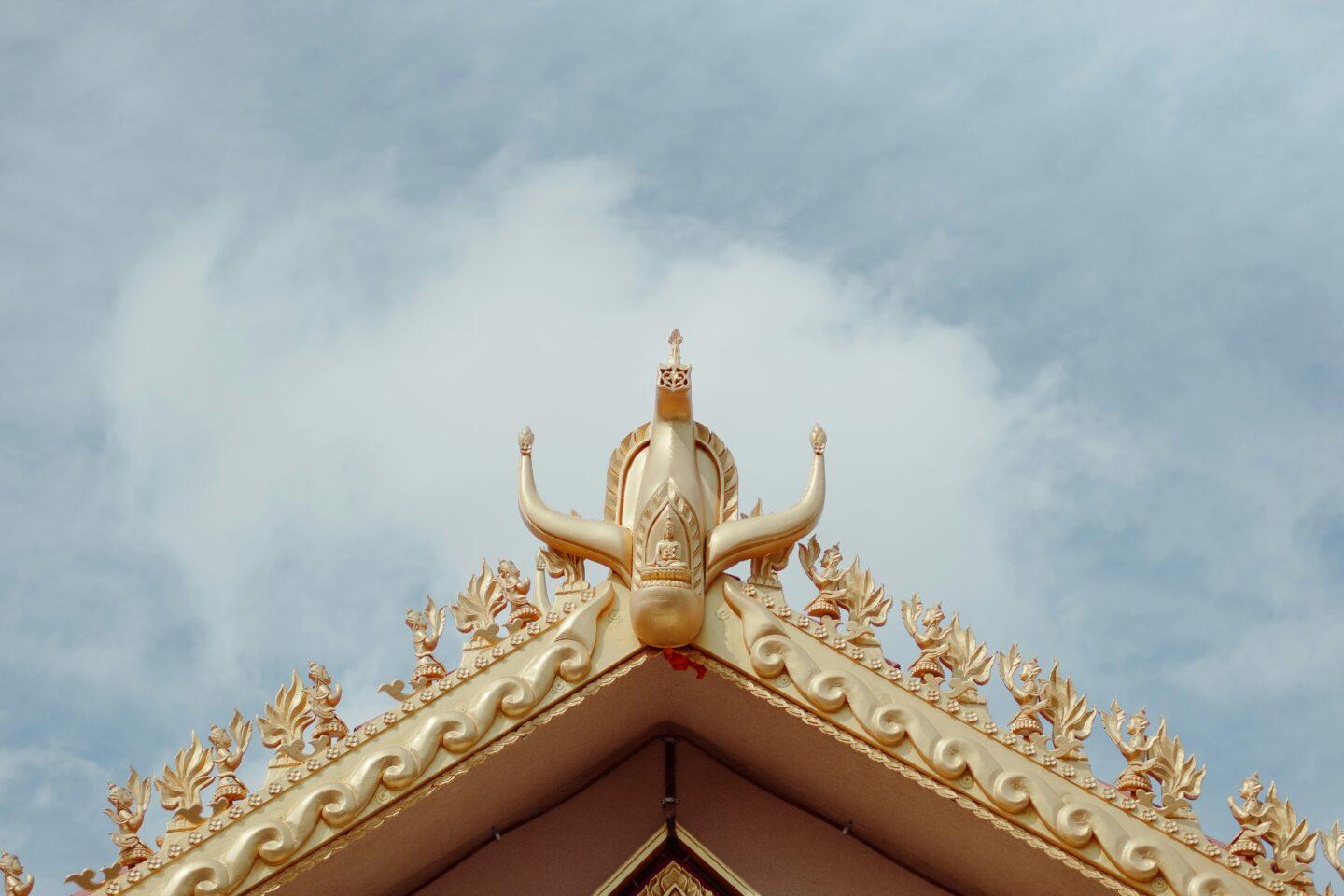
These beliefs are not framed as folklore. They have lived alongside modern religion, not in opposition to it, for a long time throughout the whole of Indonesia. The sea, the forest, and even certain animals are often understood as holding presence or significance beyond the physical. For visitors, this is not always obvious, but can be noticed in conversation, in gestures, and in the smell of incense from daily sunrise offerings.
Life shaped by the sea
Across Raja Ampat’s 1,500 islands, communities are small, scattered and almost entirely oriented around the water. Many villages are only accessible by boat, and daily life continues to follow the tides and the weather.
Fishing remains central, not just as a livelihood, but as a continuation of knowledge passed down through generations. Techniques are simple, often unchanged, shaped by an understanding of seasons, currents and ecosystems that cannot be taught quickly.
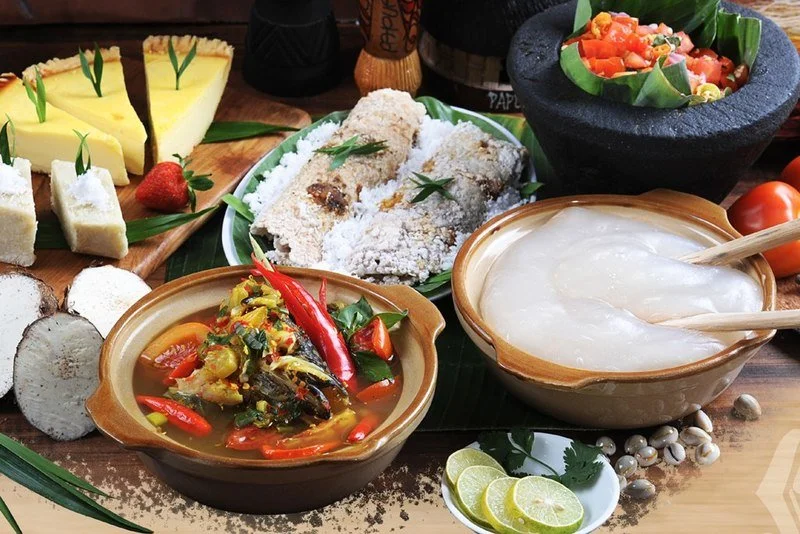
Food in Raja Ampat reflects this closeness to place. Fish is caught in the morning and eaten the same day, grilled over an open fire or cooked with minimal seasoning. Sago, cassava, and foraged greens form the base of meals, grounding them in what the land and sea naturally provide.
Craft, language and quiet continuity
Raja Ampat is also defined by what has been carried forward. Traditional boat building, wood carving, and weaving are still practised, often learned informally and passed from one generation to the next. Dugout canoes, carved from single tree trunks, remain a common sight, shaped with both practicality and a sense of craft.
Language, too, reflects the region’s complexity. Multiple local languages exist across the islands, many with strong Papuan and Austronesian influences, alongside Bahasa Indonesia, which acts as a shared national language. Some of these languages are now at risk of disappearing, not through neglect, but through gradual change. As younger generations adopt more widely spoken languages, the quieter ones begin to fade.
Encounters that are not designed
One of the defining characteristics of Raja Ampat is the absence of performance. Village life is not staged. There are very few overly curated moments designed to translate culture into something easily consumed. Instead, what visitors encounter are fragments of everyday life: children playing on wooden jetties, fishermen returning with their catch, conversations that unfold without expectation.
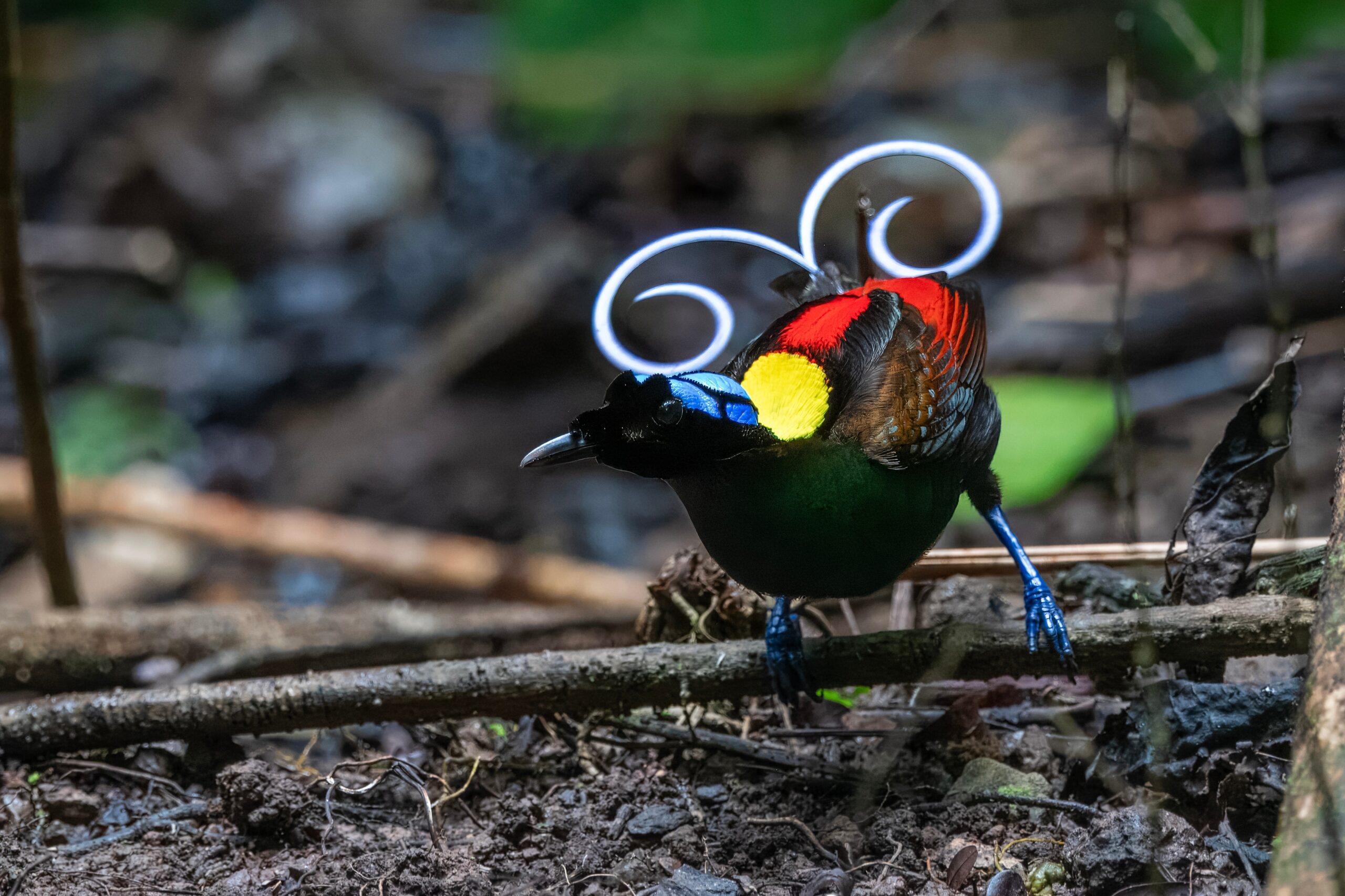
The same applies to the natural world. To see the birds of paradise, for example, requires patience. You wake before sunrise, walk through dense forest, and wait. If they appear, it is brief, almost incidental, and entirely on their terms.
This lack of control changes the experience. It asks for attention, for patience, and for a willingness to let things unfold without interference: the polar opposite of what most of us experience in our always-on-demand lifestyles.
A place that resists definition
Raja Ampat is often described in terms of its extremes: its biodiversity, its remoteness, and its beauty. But these descriptions only capture part of it. What makes the region distinctive is not any one element, but the way everything exists together. Indonesia island culture is not separated from nature. History is not preserved behind glass. Daily life is not reshaped to meet expectations.
Instead, it continues as it always has, adapting slowly, absorbing influence, but never losing its underlying connection to place.

The depth beneath the surface
In Raja Ampat, the most meaningful experiences are rarely planned. They unfold in small, unremarkable moments: a shared meal, a passing story, a quiet understanding of how life is lived here.
That is what makes it worth the journey. Not just what you see, but what you come to understand. A place where culture is not presented, but simply lived.

TRENDING ARTICLES





FEATURED YACHT