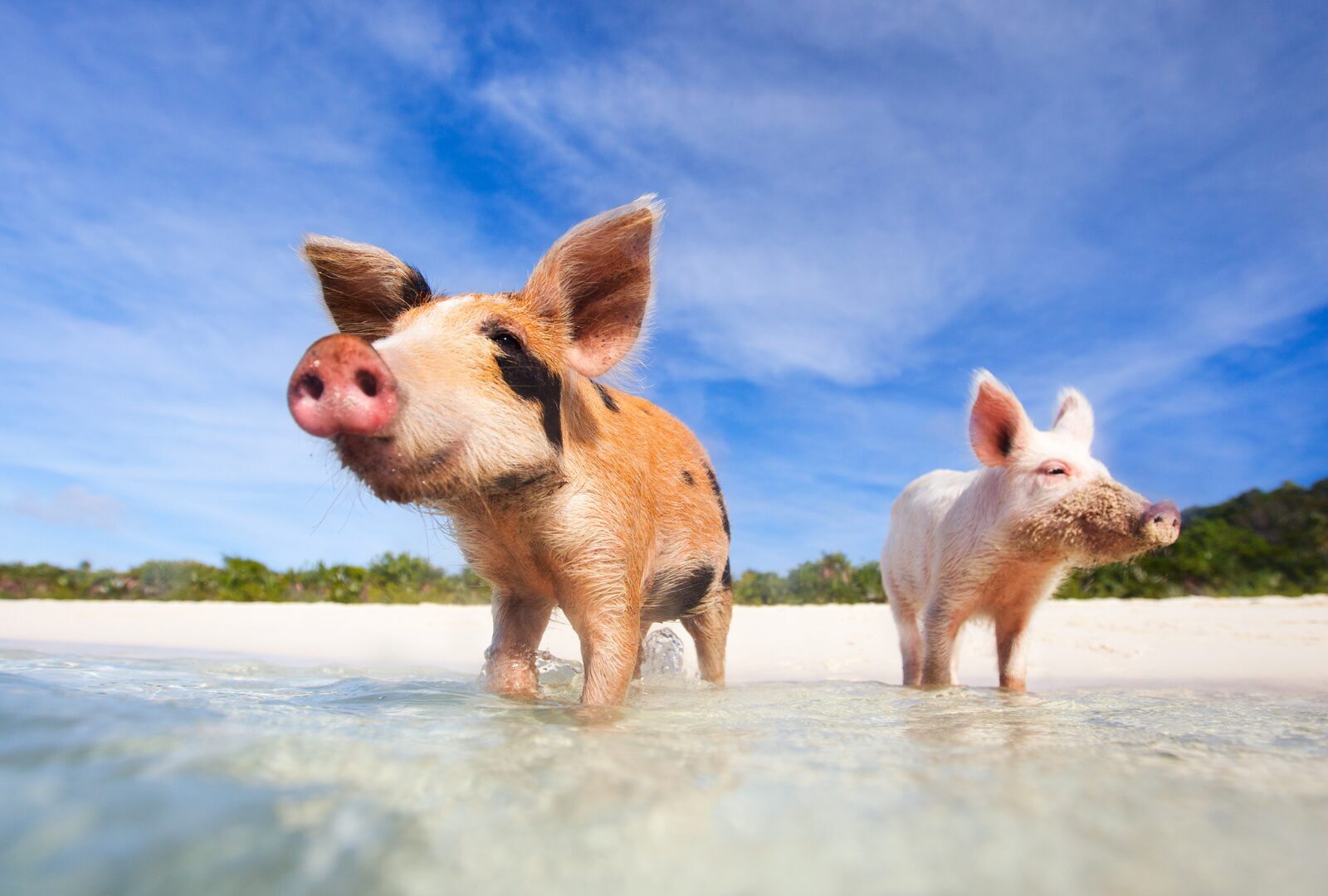
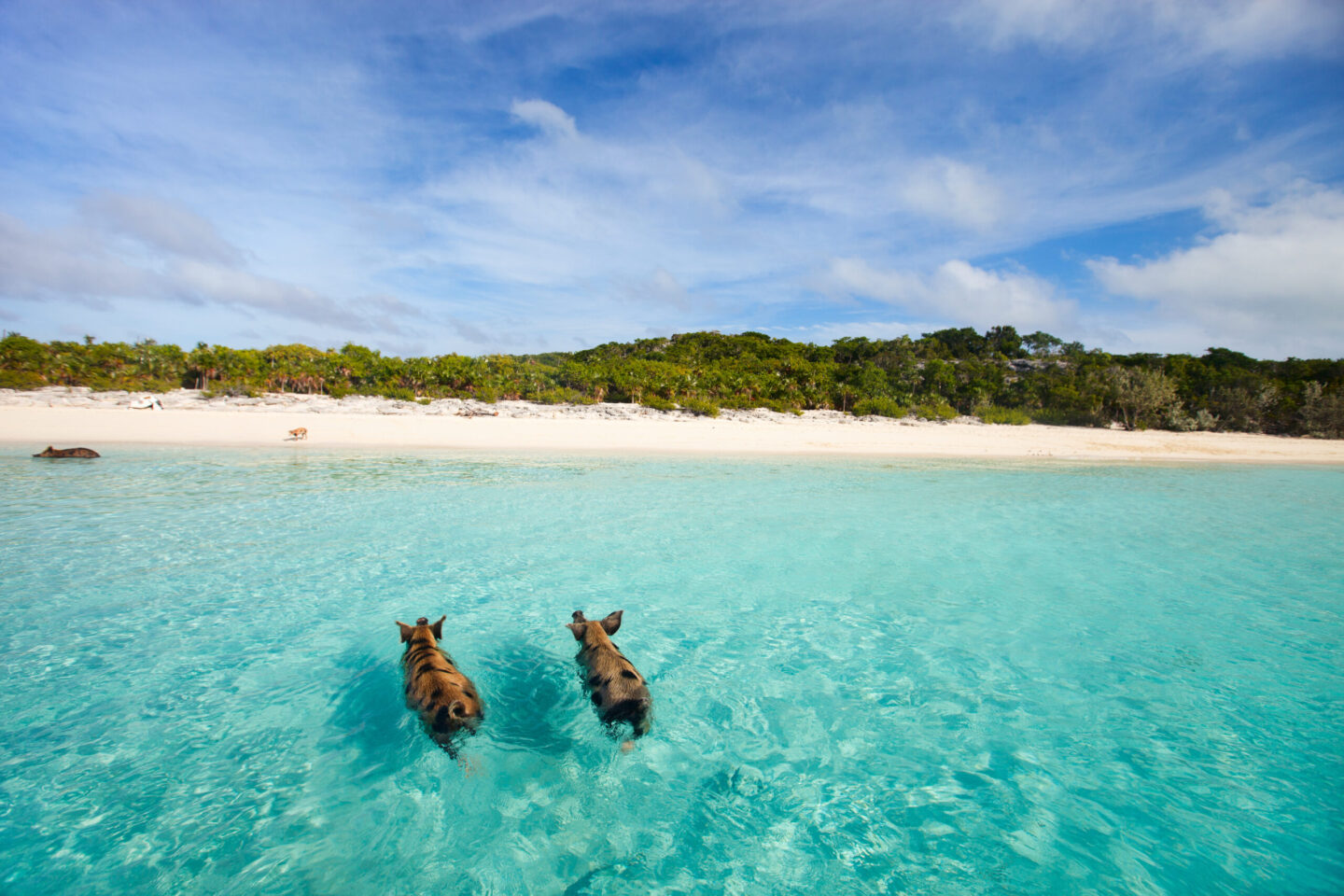
Swimming pigs, Bahamas edition. I would imagine that this is almost certainly not what immediately springs to mind when you imagine a trip around this Atlantic Ocean archipelago.
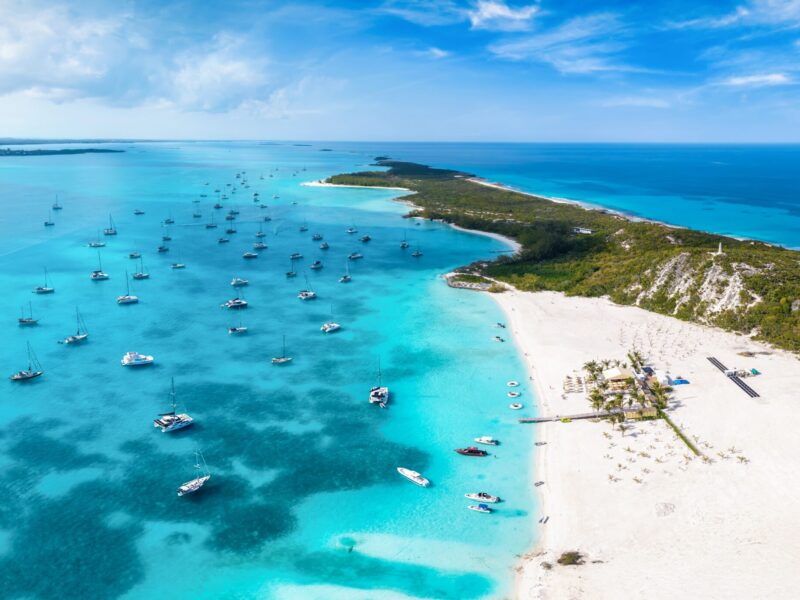
That said, since its inception in the 1990s, and becoming a global viral phenomenon in the 2010s after appearing on TV and across social media, tourists in their droves flock to Big Major Cay (Pig Beach Exumas) to spend time with, and get that all-important Instagram picture with, these semi-feral animals. But is it an experience worth ticking off the list, or just hyper-inflated Insta-fodder? We take a look.
Pig seeking food: how the swimming pigs (Bahamas) came to be
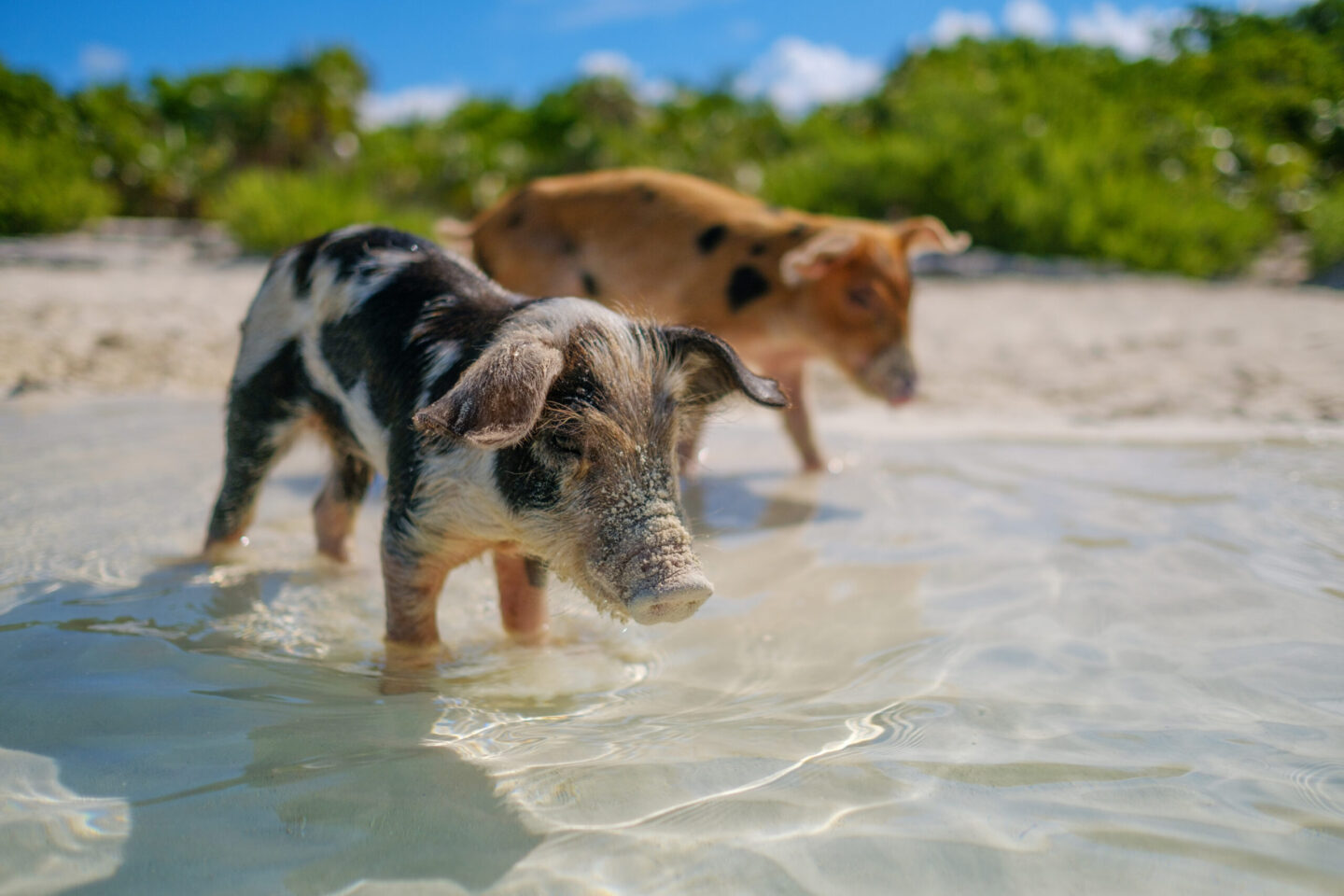
Although tall tales exist about shipwrecked swine, the most likely explanation for the swimming pigs, Bahamas is that they were introduced by local farmers from nearby Staniel Cay to be raised for food, before learning to swim out to passing boats to seek out scraps. Once these boats became firmly associated with feeding time, the tourist attraction was born.
Part of the appeal, of course, lies in the sheer absurdity of it. Swimming pigs (Bahamas edition) represents exactly the kind of travel moment that feels tailor-made for the social media age, unexpected, slightly surreal, and easy to capture. Set against the Bahamas’ famously clear water and white sand, it is no surprise that Pig Beach, Exumas, has become one of the most recognisable images of the destination.
But as with many viral experiences, what is presented online tends to be a very specific version of reality. The framing is tight, the moment is brief, and what sits just outside the picture is rarely part of the conversation. It is worth understanding what the experience actually involves before deciding whether it lives up to the expectation.
Not exactly natural
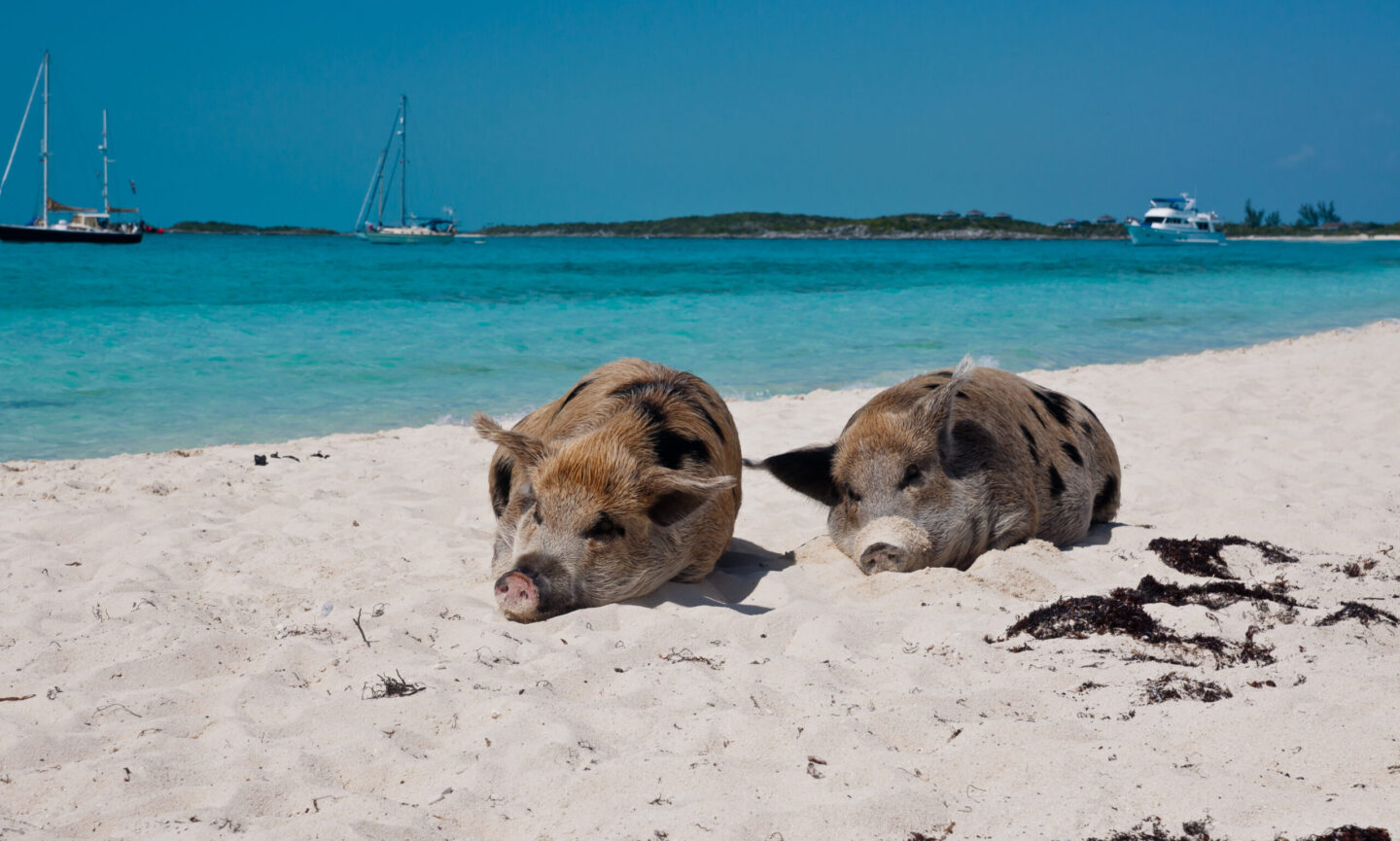
The first caveat for anyone considering whether to undertake this activity is that these swimming pigs are not native to The Bahamas. Their presence is entirely man-made, and the experience itself exists because of tourism rather than anything organic to the environment. As a result, they are exposed to conditions they are not naturally suited to, including prolonged sun exposure, saltwater, and a diet shaped largely by visitors. This can leave them vulnerable to sunburn and other health issues, particularly when fed inappropriate food or, in some cases, alcohol.
Adorable and photogenic though these hogs may be when walking on white sand and swimming in turquoise waters, they are, ultimately, still pigs. And pigs can bite and defecate, a lot. What is often presented as a light, playful encounter can, in reality, be messy and unpredictable, with tourists encouraged to feed them using wooden stakes in order to reduce the likelihood of injury.
It is not necessarily a reason to dismiss the experience altogether, but it does shift how it should be approached, with a little more awareness of what is actually happening beyond the photograph.
Sandy Toes pigs: An ethical alternative
If all this talk of burned bristles, piggy poop and nibbling has put you off, I’m not surprised. However, this doesn’t mean your dreams of sharing the water with swine must be completely curtailed, it might just be worth travelling elsewhere.
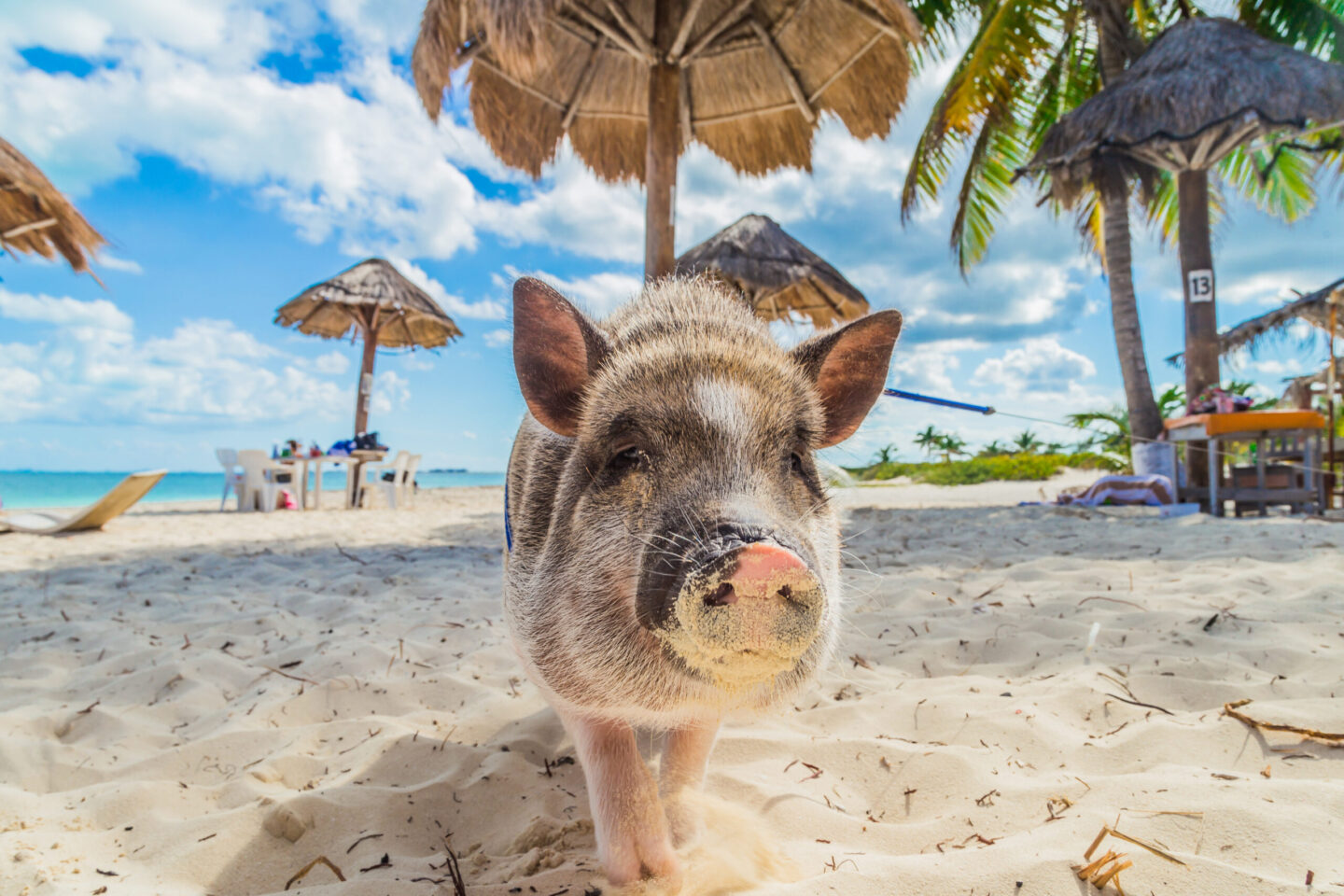
Our top tip? Head over to Rose Island and get acquainted with the Sandy Toes swimming pigs. Swimming with these Rose Island pigs offers something quite different. Babe, Wilbur, Pumba, Larry, Curly, Mo, Ginger, Pepper and Spice have been raised from babies by their owners, meaning they are tame, safe and happy to come out and play with visitors throughout the day.
Receiving regular nutritional care, skin and spa care (including suncream), vet visits and vaccinations, the Sandy Toes pigs also benefit from protected, shady sleeping paddocks, with their keepers ensuring that the environment is kept as clean and hygienic as possible.
Alongside its pig provision, Rose Island is also home to snorkelling, a private beach, a hammock garden, a beach bar, and kayak and tube rentals. Nature lovers can also enjoy Sandy Toes’ sanctuary of protected wildlife, including Royal peacocks, curly-tail lizards and reef life just offshore.
Swimming pigs Bahamas: Worth doing, just differently
In short, if you are keen to satisfy your piggy curiosity and spend time in the water with these animals as part of your Bahamas travel adventures, we would encourage you to look beyond the hype and head over to Rose Island, where you can be assured of happy porkers, cleaner water, and a cleaner conscience where animal welfare is concerned.

TRENDING ARTICLES
FEATURED YACHT