
A warm bite of flaky fish, lifted with turmeric and the sharpness of lemongrass, is often all it takes to reset after a day in Raja Ampat. Whether you’ve spent hours diving through the reefs of the Dampier Strait or trekking across Waigeo in search of the elusive bird of paradise, Raja Ampat cuisine has a way of bringing you back into the present.
Raja Ampat is known first for its marine life, but it is just as much a culinary landscape as it is a diving destination. The cuisine reflects the same principles that define the islands themselves: a reliance on what is available, a respect for how it is sourced, and a way of eating that is closely tied to both sea and land.
The foundations of Indonesian flavour
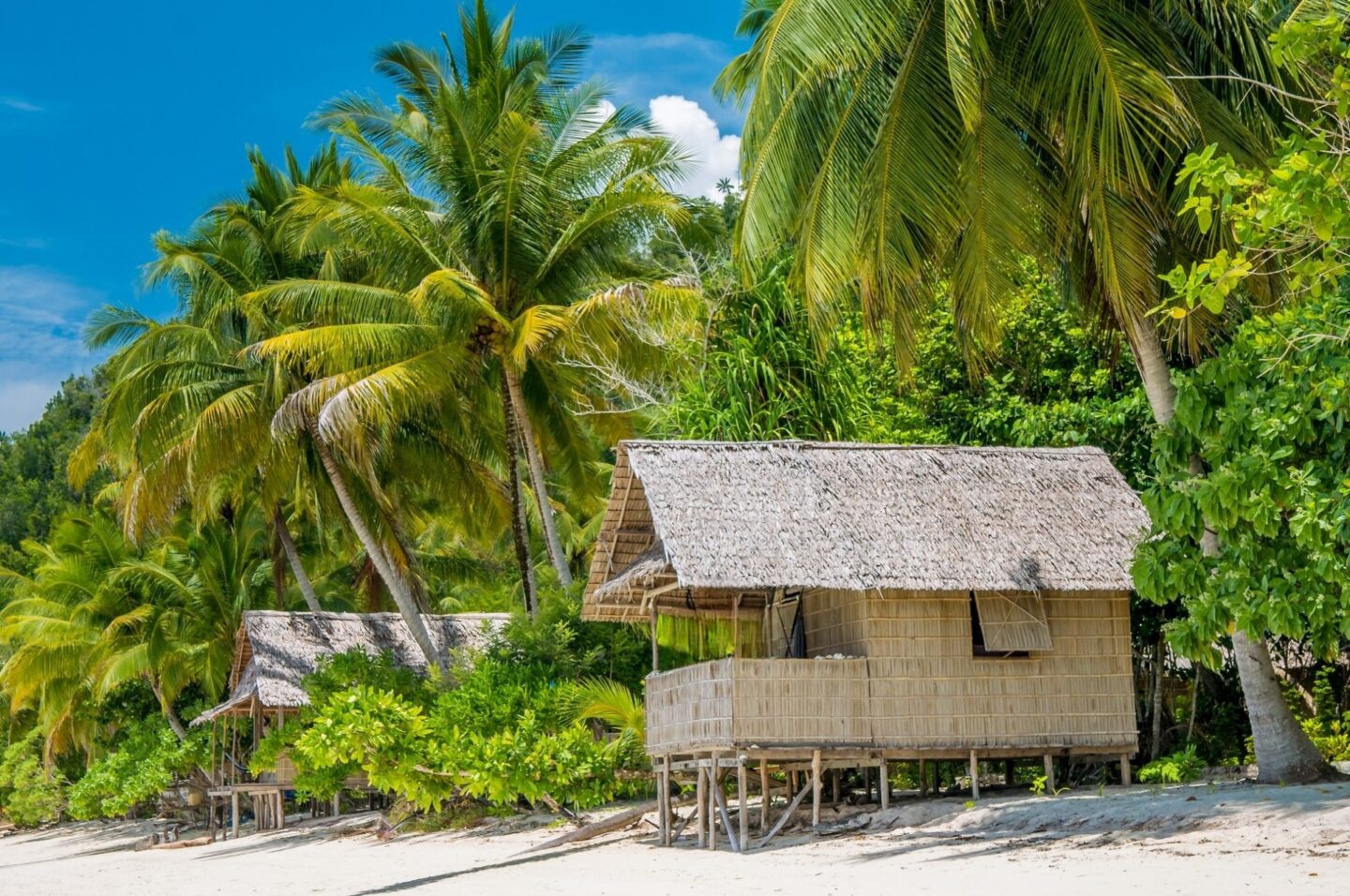
Situated in the far eastern part of Indonesia, bordering Papua New Guinea, Raja Ampat’s Indonesian-Papuan-style cuisine reflects its location. Influenced by Indonesia, which features addictive layers of sweet, spicy, and sour flavours, you can find familiar staples like fiery sambal and indulgent nasi goreng on the island. However, Raja Ampat also has a milder, more back-to-basics approach to food, similar to that of Papua New Guinea, placing emphasis on fresh, clean, and hearty dishes straight from the ground and sea.
What you’d typically find on your plate is a carbohydrate such as sago, cassava or rice, simply cooked on its own to preserve its delicate and subtle flavours. It perfectly complements any protein, usually fish caught that morning. Alongside hand-harvested boiled leafy greens and, of course, a spice or soup to balance out the meal.
Eating on the islands
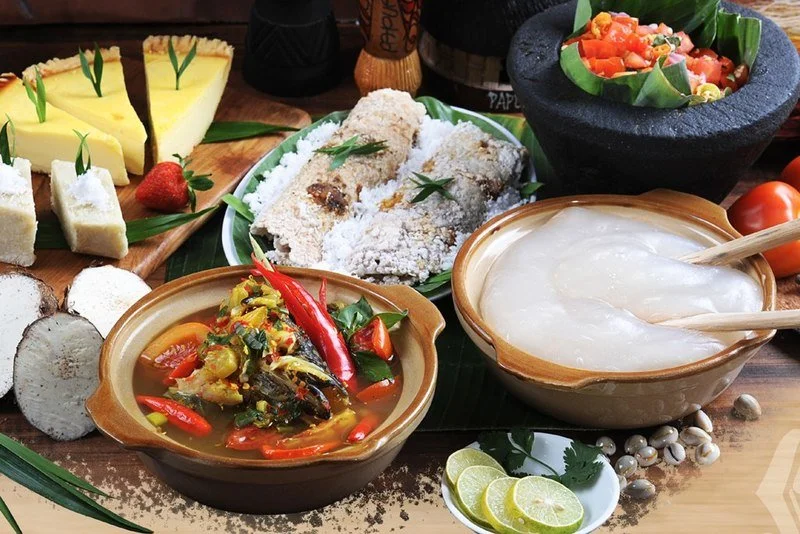
Raja Ampat cuisine is an extraordinary part of any Indonesia charter experience, with local delicacies like Pepeda, a satisfying glutinous staple eaten year-round, and Norohombi, a savoury and chewy sago-based dish that is difficult to find on the mainland.
In contrast to other parts of Indonesia, rice is not the primary source of carbs in these recipes because sago palms thrive in lowlands and coastal regions. In most cultures, sago is notably a dessert, but here it’s also a mealtime staple that replaces rice as the ideal accompaniment to bold flavours of local spices.
When looking at what to eat in Raja Ampat, prepare to be spoiled with fresh fish daily, from delicate reef fishes like snappers and groupers to indulgent tuna from the open seas. All being cooked in an open fire, simply salted to perfection, putting flavour forward and letting the sweet fish speak on its own.
You can count on the fact that every piece of seafood that arrives on your plate was caught that morning, much more often than not, using sustainable and traditional fishing methods, helping keep marine life thriving. Raja Ampat takes conservation seriously; that’s why you can no longer find ketam kenari or coconut crabs on the menu, as they’re now a protected species. So, watch out for people trying to sell them around Piaynemo and instead look for one of these tasty dishes we recommend below.
Things not to miss
Raja Ampat is far from being a commercial tourist spot, but it’s gaining traction from diving enthusiasts and yacht charter travellers in the know. That said, both international and mainland dishes are available throughout the region. Our recommendation, though? Stick to the local cuisine of Raja Ampat. It’s healthy, delicious, and a culinary experience only found there.
Here’s our top Raja Ampat dishes to try.
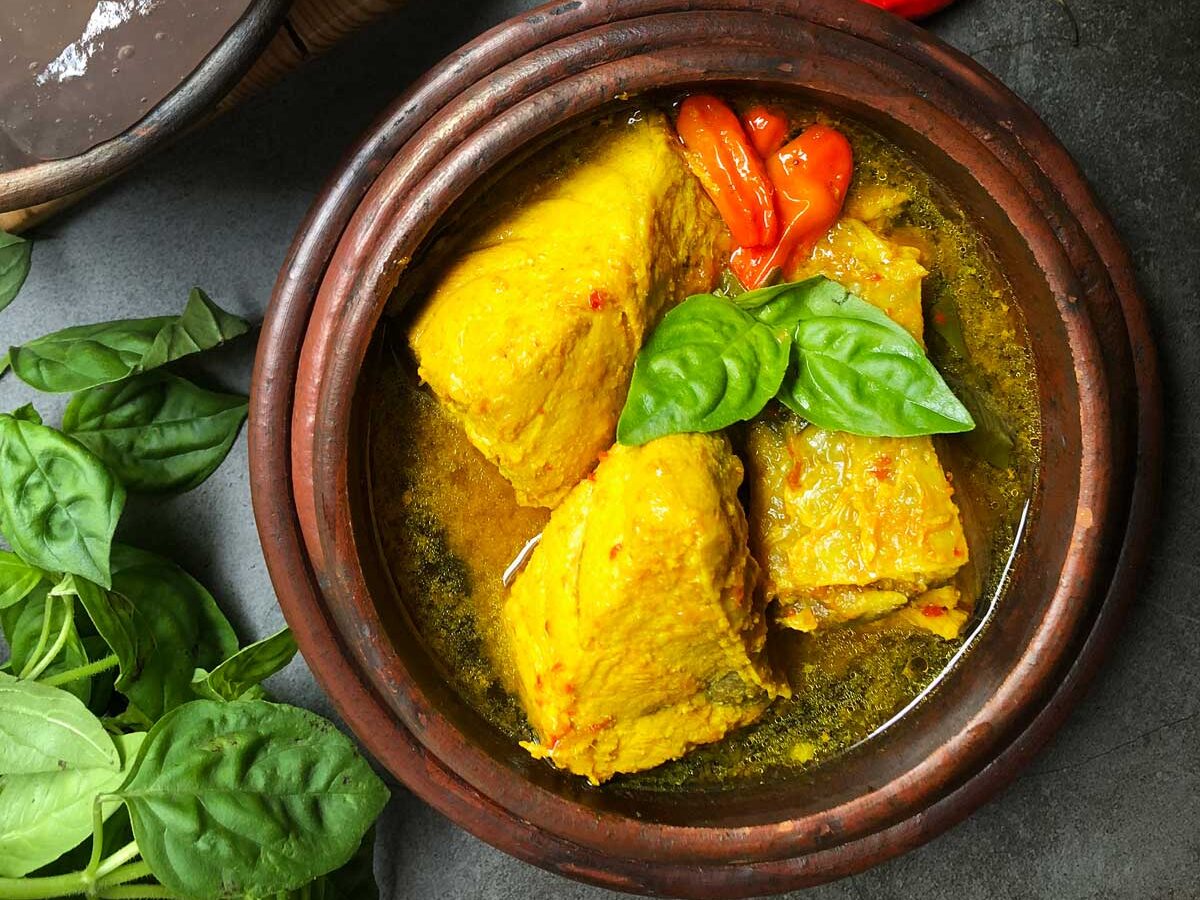
Kuah kuning – a tangy, turmeric-based fish soup usually made with freshly caught tuna or snapper and made refreshing by adding various herbs and spices.
Papeda – a gelatinous porridge-like dish made by grinding sago, is a common staple in Raja Ampat cuisine. Its greyish hue may be unassuming, but you’ll be surprised by its light, savoury taste and how well the flavours go together.
Ikan bakar – freshly grilled fish over charcoal, lending a smoked but sweet taste from the freshly caught fish.
Ikan bakar manokwari – a spicier variation of the dish where the fish is marinated in lime and sambal.
Pisang goreng – a dessert or a sweet snack, take a bite of some fried native bananas coated with melted palm sugar.
Sago lempeng – a chewy flatbread drizzled with palm sugar and some shaved coconut.
While the Raja Ampat cuisine is delectable, we can’t forget the island’s fresh produce, such as scarlet papayas and refreshing coconuts. Don’t overlook the abundant native banana trees, whose fruit is smaller but sweeter than that found elsewhere. You can also find unusual tropical fruits like snake fruit, whose scaly exterior will remind you of a dragon’s egg from a fantasy novel. Rambutans, which can be best described as a cross between a lychee and a longan, is also a unique fruit to try in Raja Ampat: hidden in a red, hairy, leathery skin.
Cuisine on board the yacht
Food on board in Raja Ampat is shaped as much by planning as it is by place. While the region offers exceptional local produce, particularly seafood caught daily by nearby communities, most yachts rely on specialist provisioning companies to source everything else. From specific ingredients to highly tailored dietary requests, almost anything can be arranged, but only with the right preparation. A detailed preference sheet, shared well in advance, is essential for anyone with specific requests.
What usually follows is a balance between the two. Freshly caught fish, often prepared simply to preserve its flavour, sits alongside more structured menus designed around the guest.

A way of eating, shaped by place
Food in Raja Ampat is not separate from the place. It is a direct result of it. The sea feeds the islands, the land responds in kind, and what ends up on your plate reflects that balance more than anything else.
Much of what you eat has been caught or gathered that same day, prepared simply, and served without much interference. There is a clarity to it. Not just in flavour, but in where it comes from and how it arrives in front of you. Spend enough time here, and that connection becomes harder to ignore. The pace slows, the ingredients feel more immediate, and meals begin to feel less curated and more shared.
There’s a beautiful belief held by some local communities that the natural world is not just surrounding you, but actively shaping what is possible. The birds of paradise, often seen moving through the canopy at dawn or dusk, are sometimes believed to play a role in the abundance of the land itself.
Whether you take that literally or not, it almost doesn’t matter. Sitting there, with a plate of fresh fruit or a simple meal in front of you, it makes a certain kind of sense. So yes, take a moment. Wave thanks over that bowl of papaya. Not out of ritual, but because, here, it feels like the right thing to do.

TRENDING ARTICLES





FEATURED YACHT